
As I stood in my kitchen, the aroma of lemon zest and garlic filled the air, whisking me away to sun-drenched Mediterranean shores. This Creamy Lemon Garlic Salmon and Asparagus Pasta is what I call a joyful escape, effortlessly blending vibrant flavors for a dish that sings of warm weather dining. Not only is it a quick dinner recipe that comes together in just 30 minutes, but it also brings the comfort of creamy indulgence without compromising on freshness. The tender salmon adds a heartiness to the dish while the crisp asparagus provides a delightful crunch. Perfect for weeknights when time is short but flavor is non-negotiable, it’s bound to impress anyone seated at your table. Curious to see how this vibrant pasta can transform your dinner routine? Let’s dive in!
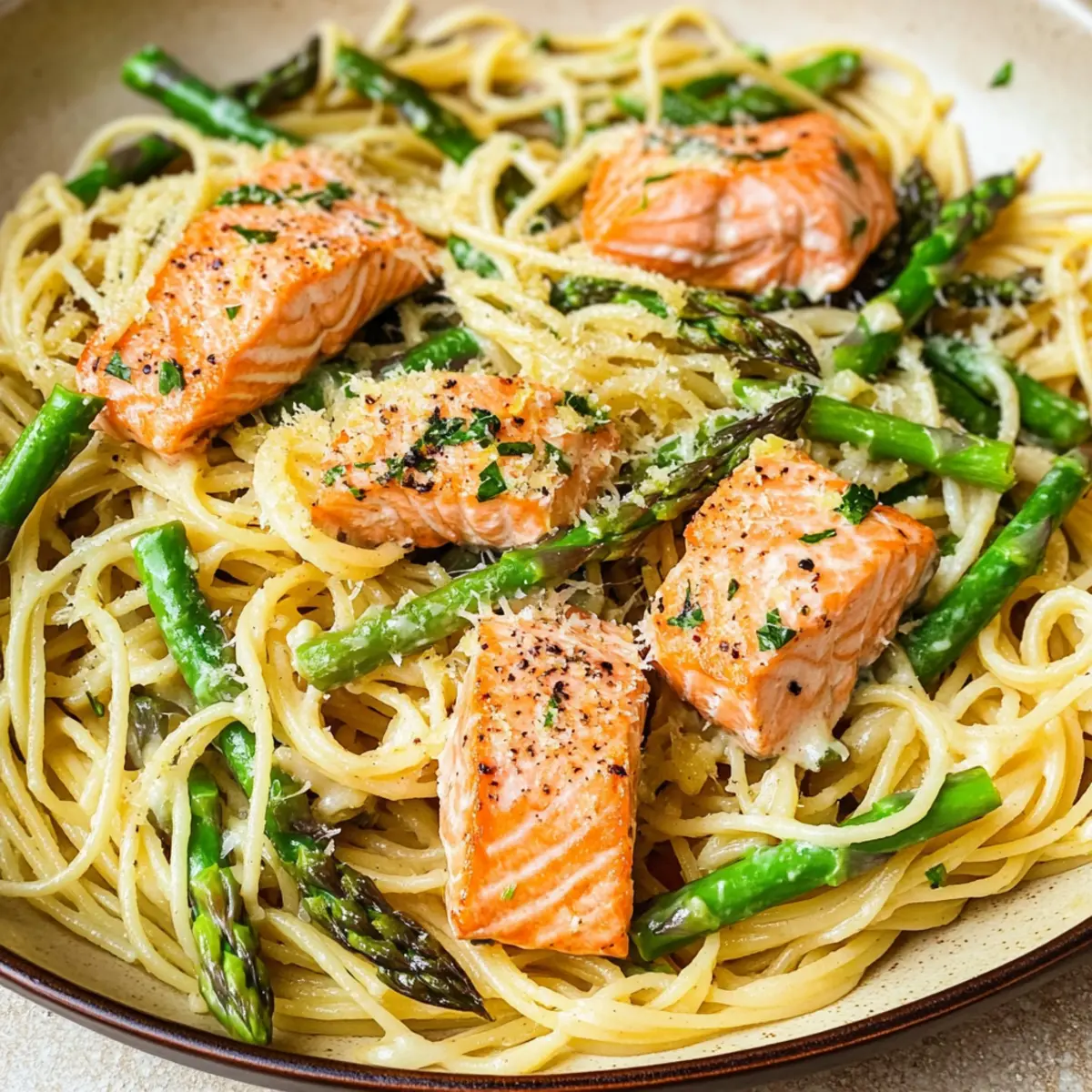
Why is this Salmon and Asparagus Pasta special?
Simplicity and Speed: Whipping up this dish is a breeze; it’s ready in just 30 minutes, perfect for those busy evenings.
Rich, Creamy Satisfaction: The luscious lemon garlic cream sauce envelops the pasta, creating a comforting experience that’s hard to resist.
Fresh Ingredients: Each component shines, with tender salmon and crisp asparagus bringing a delightful contrast to every bite.
Versatile Options: Feel free to substitute with your favorite pasta or seasonal veggies; it’s as adaptable as your taste!
Crowd-Pleasing Appeal: Whether it’s a weeknight dinner or a special occasion, this recipe guarantees smiles around the table.
Nutritional Balance: It’s not just delicious but also nutritious—a wholesome meal that makes you feel good about what you eat. Don’t forget to check out other delightful options like Garlic Mushroom Pasta for more inspiration!
Salmon and Asparagus Pasta Ingredients
-
For the Pasta
• Uncooked Pasta – Base for the dish, providing structure. Substitute with any pasta type you have on hand, like spaghetti or fettuccine. -
For the Salmon and Asparagus
• Fresh Salmon – Provides rich flavor and protein. Wild-caught salmon offers the best taste and texture.
• Asparagus – Adds freshness and crunch. Trim the ends for optimal tenderness.
• Salt & Pepper – Essential for seasoning. Adjust to taste.
• Italian Seasoning – Adds aromatic flavor layers. Use dried herbs or an Italian herb mix. -
For the Creamy Sauce
• Olive Oil – For cooking the salmon. Can substitute with avocado oil for a different flavor profile.
• Butter – Adds richness to the sauce. For a lighter version, reduce the amount or use a butter substitute.
• Garlic (minced) – Provides aromatic depth to the sauce. Fresh garlic preferred; can substitute with garlic powder (1/8 tsp for each clove).
• Lemon Juice & Zest – Offers brightness to the dish. Using fresh lemon is recommended for the best flavor.
• Parmesan Cheese (freshly grated) – Enhances creaminess and flavor. Substitute with Pecorino Romano for a stronger taste.
• Heavy/Whipping Cream – Creates the creamy sauce. Can substitute with non-dairy cream for a lighter alternative.
Step‑by‑Step Instructions for Creamy Salmon and Asparagus Pasta
Step 1: Boil the Pasta
Begin by bringing a large pot of salted water to a rolling boil over high heat. Once boiling, add your uncooked pasta and cook according to the package instructions until al dente—usually around 8-10 minutes. Stir occasionally to prevent sticking and keep an eye out for that perfect tender texture, then drain and set aside, reserving a bit of the pasta water.
Step 2: Prepare the Asparagus
While the pasta cooks, take your asparagus and trim the tough ends off. Cut the asparagus into bite-sized pieces, about 1-2 inches long, to ensure even cooking. Set the chopped asparagus aside as you will sauté it shortly, adding freshness and crunch to your creamy salmon and asparagus pasta.
Step 3: Season the Salmon
Season your fresh salmon fillets generously with salt, pepper, and a sprinkle of Italian seasoning on both sides. This will elevate the flavor and help create a lovely crust when you cook them. Ensure even coverage, as this seasoned salmon will be the star of your dish.
Step 4: Sear the Salmon
In a large skillet, heat 2 tablespoons of olive oil and 1 tablespoon of butter over medium-high heat until shimmering. Carefully place the seasoned salmon fillets in the skillet and sear them for about 3 minutes on each side, or until they are golden brown and cooked through. The salmon should flake easily with a fork. Once cooked, remove the salmon and set aside.
Step 5: Sauté the Asparagus
In the same skillet, add the chopped asparagus and sauté for about 2-3 minutes, stirring occasionally, until it starts to turn tender and bright green. The color change will indicate that it is ready for the next flavor boost. Add minced garlic to the asparagus and cook for an additional 30 seconds, stirring constantly to avoid burning.
Step 6: Create the Creamy Sauce
Now, pour in the lemon juice and zest, followed by the heavy cream and freshly grated parmesan cheese into the skillet with the asparagus. Stir well to combine and let the sauce simmer gently for about 1-2 minutes, allowing the cheese to melt and the flavors to meld together beautifully, creating a luscious sauce.
Step 7: Combine Salmon and Pasta
Return the cooked salmon to the skillet, breaking it into smaller pieces as you go. Mix it gently with the asparagus and sauce, allowing everything to heat through for about a minute. This melds the flavors beautifully and infuses the salmon taste into the creamy mixture.
Step 8: Toss with Pasta
Finally, add the drained pasta to the skillet and toss everything together until the pasta is thoroughly coated in the creamy sauce. If the sauce seems too thick, you can add a splash of the reserved pasta water to reach your desired consistency. Serve your creamy salmon and asparagus pasta immediately, garnished with extra parmesan if desired.
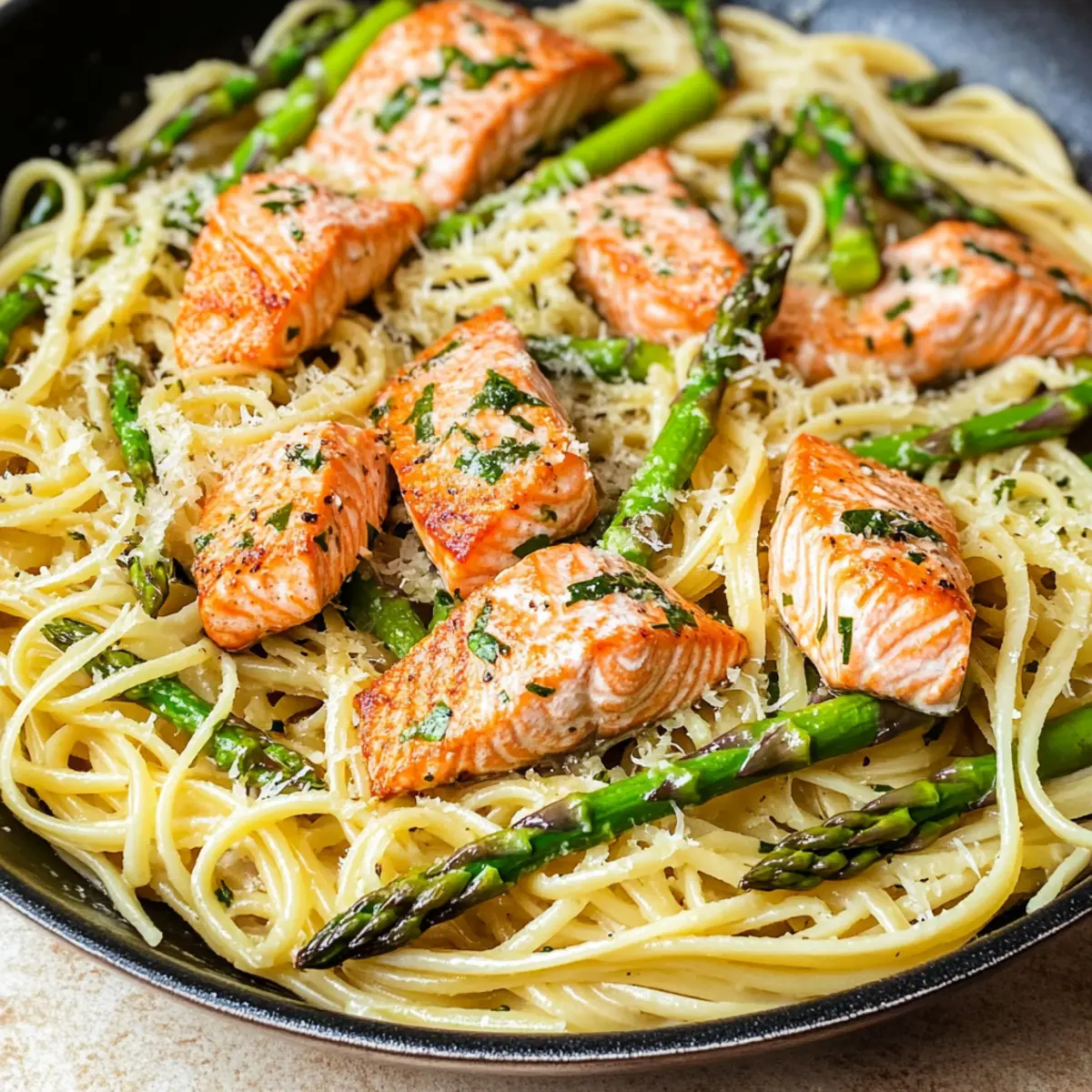
What to Serve with Creamy Salmon and Asparagus Pasta
Building a delightful meal around this vibrant dish elevates your dining experience to new heights.
-
Crisp Green Salad: A refreshing salad with mixed greens, cherry tomatoes, and a lemon vinaigrette adds brightness and crunch, balancing the creamy flavors.
-
Garlic Bread: Warm, crusty garlic bread provides a comforting, buttery contrast that’s perfect for scooping up any leftover creamy sauce, making every bite scrumptious.
-
Roasted Vegetables: Roasted seasonal veggies like zucchini and bell peppers add texture and contrasting flavors that beautifully complement the salmon and asparagus.
-
Chardonnay: A chilled glass of oaked Chardonnay enhances the dish’s creamy richness while the wine’s bright acidity cuts through the flavors for a delightful sip.
-
Lemon Sorbet: For a refreshing dessert, lemon sorbet cleanses the palate perfectly after enjoying the savory pasta, leaving a zesty finish.
-
Herb-Infused Water: Infuse water with fresh mint and lemon slices to keep the meal refreshing and light, making it a wonderful drink option for warm nights.
Remember, the right accompaniments can turn this creamy salmon and asparagus pasta into a memorable feast!
How to Store and Freeze Salmon and Asparagus Pasta
Fridge: Store leftovers in an airtight container for up to 2 days to maintain freshness. Reheat gently on the stove, ensuring the salmon stays moist.
Freezer: If freezing, transfer cooled pasta to an airtight container or freezer bag. It can last up to 3 months but may affect texture upon reheating.
Reheating: For best results, reheat in a skillet with a splash of cream or water over low heat to restore creaminess and prevent overcooking the salmon.
Serving: Enjoy your pasta warm, garnished with extra parmesan or fresh herbs, to bring back that delightful flavor.
Expert Tips for Salmon and Asparagus Pasta
- Prep Ahead: Gather all ingredients before starting to cook. This ensures a smooth workflow and a joyful cooking experience!
- Watch the Salmon: Avoid overcooking the salmon; it should remain moist and flaky. Use a timer for perfect results!
- Sauce Consistency: Adjust the cream and cheese quantities based on your preferred sauce thickness; a runny sauce can’t hold onto pasta properly.
- Flavor Boost: Enhance the flavor by adding a splash of white wine while sautéing the garlic and asparagus for added depth.
- Vegetable Swaps: Feel free to swap asparagus with seasonal veggies for variety, but be mindful of their cooking times to maintain texture.
- Serving Tips: Pair your creamy salmon and asparagus pasta with a fresh green salad or a glass of chilled white wine for a balanced meal.
Make Ahead Options
These Creamy Salmon and Asparagus Pasta are fantastic for busy weeknights and can seamlessly fit into your meal prep routine! You can prep the salmon and asparagus up to 24 hours in advance by seasoning the salmon and chopping the asparagus, storing both in airtight containers in the refrigerator. To preserve the freshness of the ingredients, cover the salmon with plastic wrap, ensuring it is tightly sealed. The creamy sauce can also be made ahead and kept in the fridge for up to 3 days; just reheat it gently before mixing it with the pasta and salmon. When it’s time to serve, simply cook the pasta, combine everything in the skillet, and enjoy a comforting meal that’s just as delicious as when it’s freshly made!
Salmon and Asparagus Pasta Variations
Feel free to let your creativity shine and personalize your dish with these delicious twists!
-
Vegetable Swap: Replace asparagus with seasonal veggies like zucchini or broccoli for a unique texture and flavor. The lightness of zucchini complements the dish beautifully, providing a fresh crunch.
-
Mixed Seafood: Add shrimp alongside the salmon for a delightful seafood medley. This addition not only enhances the dish’s flavors but also offers a fun twist that seafood lovers will adore!
-
Pasta Preference: Choose whole grain or gluten-free pasta to cater to diverse dietary needs. It adds an extra layer of nutrition and texture, making every bite satisfying.
-
Herb Infusion: Incorporate fresh herbs like basil or parsley for an aromatic boost. Their vibrant flavors elevate the dish, making it feel even more special and refreshing.
-
Zesty Kick: Add red pepper flakes for a spicy kick! A sprinkle of heat balances the creamy sauce wonderfully, appealing to those who enjoy a bit more excitement in their dish.
-
Creamy Vegan Option: Substitute heavy cream with a non-dairy alternative, ensuring a rich sauce that everyone can enjoy. Coconut cream is an excellent choice, providing a subtly sweet and creamy flavor.
-
Cheese Swap: Try Pecorino Romano instead of Parmesan for a bolder flavor profile. It brings a wonderful depth of taste that pairs perfectly with the lemon garlic notes.
For even more variations, consider trying out a comforting dish like Garlic Mushroom Pasta or the vibrant Shrimp Asparagus Carbonara. Each option offers a delightful experience for your culinary adventures!
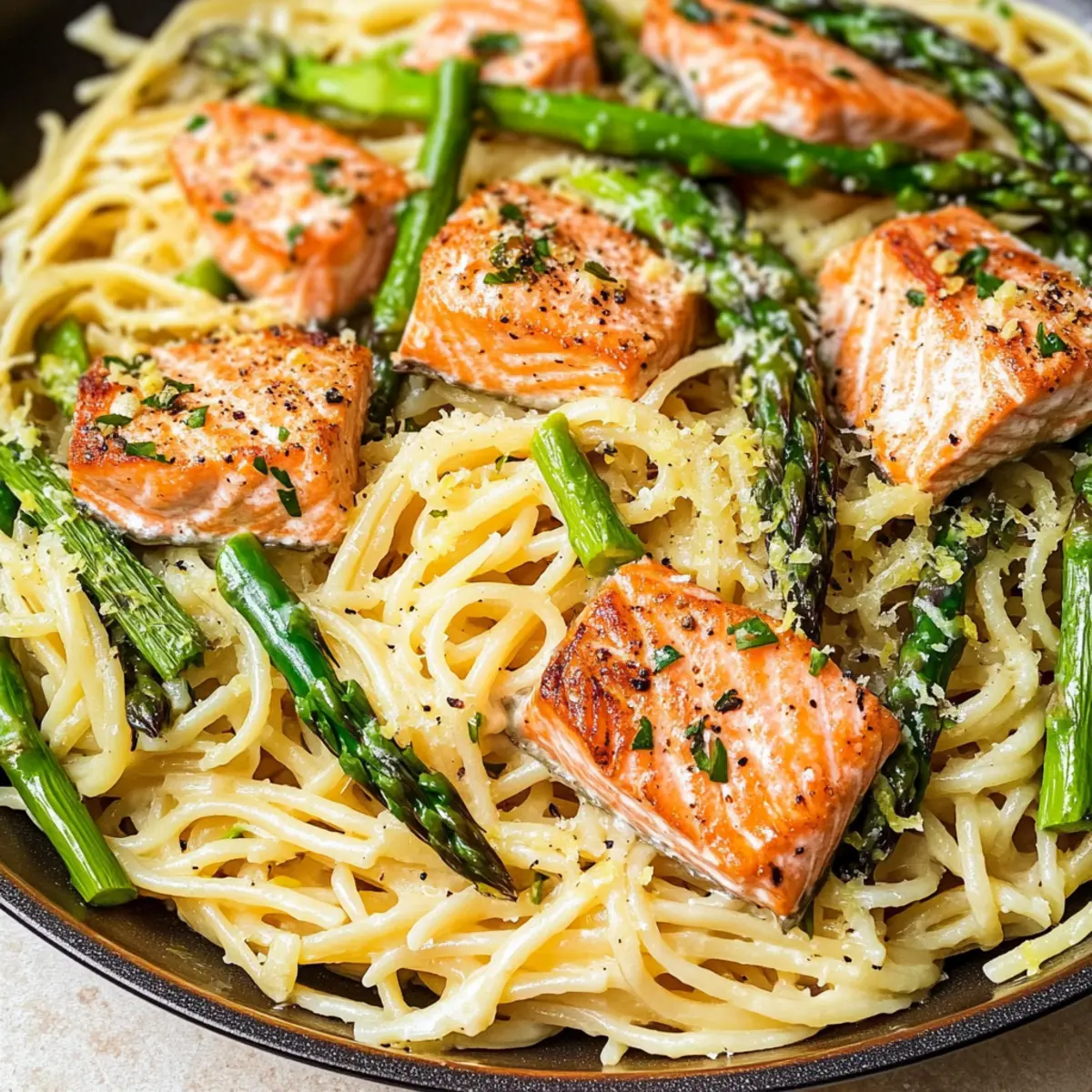
Creamy Salmon and Asparagus Pasta Recipe FAQs
What type of pasta should I use for salmon and asparagus pasta?
You can use any uncooked pasta you have on hand, like spaghetti or fettuccine. I often prefer a longer pasta because it allows the creamy sauce to cling beautifully, but feel free to pick your favorite!
How do I store leftover creamy salmon and asparagus pasta?
Store leftovers in an airtight container in the fridge for up to 2 days. When reheating, I recommend using the stove to gently warm it up; this helps maintain the salmon’s moistness while keeping the creamy sauce from separating.
Can I freeze creamy salmon and asparagus pasta?
Absolutely! To freeze, transfer the cooled pasta to an airtight container or a freezer bag, ensuring to remove any excess air. It can last up to 3 months in the freezer. Just be aware that the texture might change slightly when reheating.
What should I do if my cream sauce is too thick?
If you find your sauce is thicker than desired, don’t worry! Simply add a splash of reserved pasta water or some extra cream while stirring over low heat until you achieve the perfect consistency. It’s like magic watching it transform back into that creamy lusciousness!
Is this dish suitable for those with dietary restrictions?
This recipe can be customized easily! For dairy-free options, substitute the heavy cream and butter with non-dairy alternatives. Additionally, if you’re cooking for someone with shellfish allergies, this dish is safe since it focuses on salmon! Always check for specific allergies with your guests, too.
How ripe should the asparagus be for the best flavor?
Look for asparagus that is firm, with vibrant green stalks and closed, compact tips. Avoid any that shows dark spots or wilting. Fresh asparagus keeps its crunch and flavor, which is key to elevating your creamy salmon and asparagus pasta.
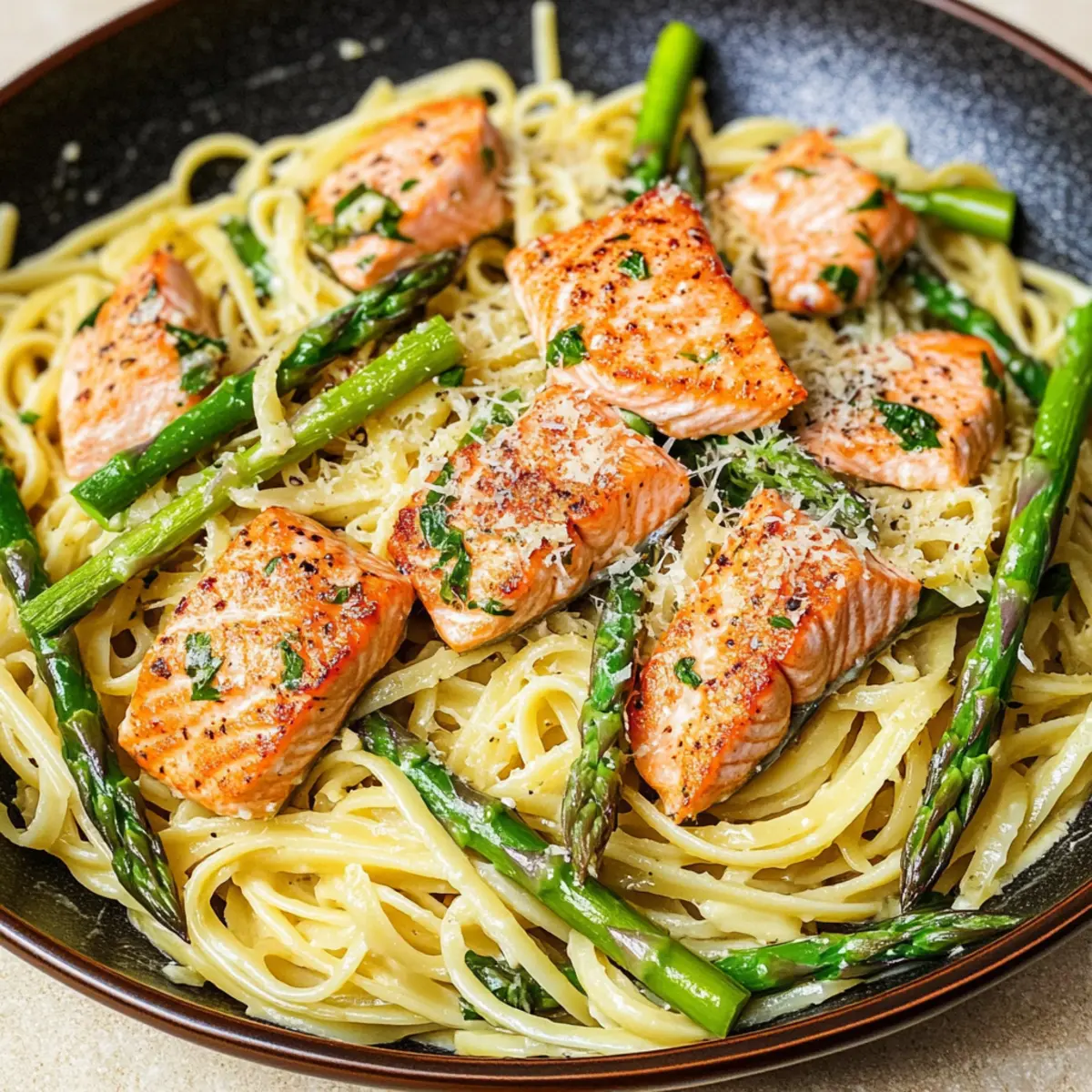
Creamy Salmon and Asparagus Pasta Ready in 30 Minutes
Ingredients
Equipment
Method
- Begin by bringing a large pot of salted water to a rolling boil over high heat. Once boiling, add your uncooked pasta and cook according to the package instructions until al dente—usually around 8-10 minutes. Stir occasionally to prevent sticking and keep an eye out for that perfect tender texture, then drain and set aside, reserving a bit of the pasta water.
- While the pasta cooks, take your asparagus and trim the tough ends off. Cut the asparagus into bite-sized pieces, about 1-2 inches long, to ensure even cooking. Set the chopped asparagus aside.
- Season your fresh salmon fillets generously with salt, pepper, and a sprinkle of Italian seasoning on both sides.
- In a large skillet, heat 2 tablespoons of olive oil and 1 tablespoon of butter over medium-high heat until shimmering. Carefully place the seasoned salmon fillets in the skillet and sear them for about 3 minutes on each side, or until they are golden brown and cooked through. Remove the salmon and set aside.
- In the same skillet, add the chopped asparagus and sauté for about 2-3 minutes, stirring occasionally, until it starts to turn tender and bright green. Add minced garlic to the asparagus and cook for an additional 30 seconds.
- Pour in the lemon juice and zest, followed by the heavy cream and freshly grated parmesan cheese into the skillet with the asparagus. Stir well to combine and let the sauce simmer gently for about 1-2 minutes.
- Return the cooked salmon to the skillet, breaking it into smaller pieces. Mix it gently with the asparagus and sauce, allowing everything to heat through for about a minute.
- Add the drained pasta to the skillet and toss everything together until the pasta is thoroughly coated in the creamy sauce. Serve immediately, garnished with extra parmesan if desired.
Leave a Reply