
As I stood in my kitchen, the delightful aroma of fresh rosemary filled the air, instantly transporting me to sun-drenched Mediterranean gardens. This Easy Homemade Rosemary Butter is my secret weapon for transforming even the simplest meals into something extraordinary. With just a handful of ingredients, this versatile compound butter brings a rich, herbal essence that perfectly enhances everything from roasted veggies to grilled meats. Quick to whip up and perfect for those who crave comfort without the fuss, it’s the kind of recipe that will make you want to ditch takeout for good. Ready to elevate your culinary creations? Let’s dive into making this delicious rosemary butter!

Why is Homemade Rosemary Butter a Must-Try?
Versatility: This rosemary butter is perfect for spreading on warm bread, melting over grilled meats, or mixing into roasted vegetables. It’s a culinary sidekick you can rely on!
Easy to Make: With just four simple ingredients, you’ll have a flavorful compound butter that anyone can whip up in no time. Say goodbye to complicated recipes!
Fresh Flavor: Using fresh rosemary elevates this butter’s taste, infusing your dishes with that aromatic herbaceous essence. There’s nothing like the flavor of homemade!
Storage Friendly: You can prepare this butter ahead of time and store it in the fridge or even freeze it for later. It’s a great way to always have a delicious enhancer on hand!
Crowd-Pleaser: Whether serving a cozy dinner or hosting friends, this butter adds an inviting touch that everyone will appreciate. Check out more ideas like my Garlic Butter Chicken for inspiring pairings!
Rosemary Butter Ingredients
For the Butter
• Unsalted Butter – Softened for easy mixing and to control saltiness.
• Fresh Rosemary – Finely diced (3 to 4 tablespoons) to create that distinct herbaceous flavor.
• Salt – (¼ teaspoon) to enhance the overall flavor of the butter.
• Pepper – (⅛ teaspoon) adds a mild spice and depth to the mix.
• Garlic Powder – (¼ teaspoon) gives a savory note; feel free to use fresh minced garlic for a bolder flavor.
Storage Options
• Airtight Container – Store your rosemary butter in an airtight container for freshness.
• Plastic Wrap – Roll into a log and wrap if you prefer easy slicing later; it’s perfect for quick use!
• Parchment Paper – Consider wrapping in parchment for freezing to maintain quality.
This recipe for rosemary butter is a quick and delicious way to elevate your culinary experience!
Step‑by‑Step Instructions for Rosemary Butter
Step 1: Combine Ingredients
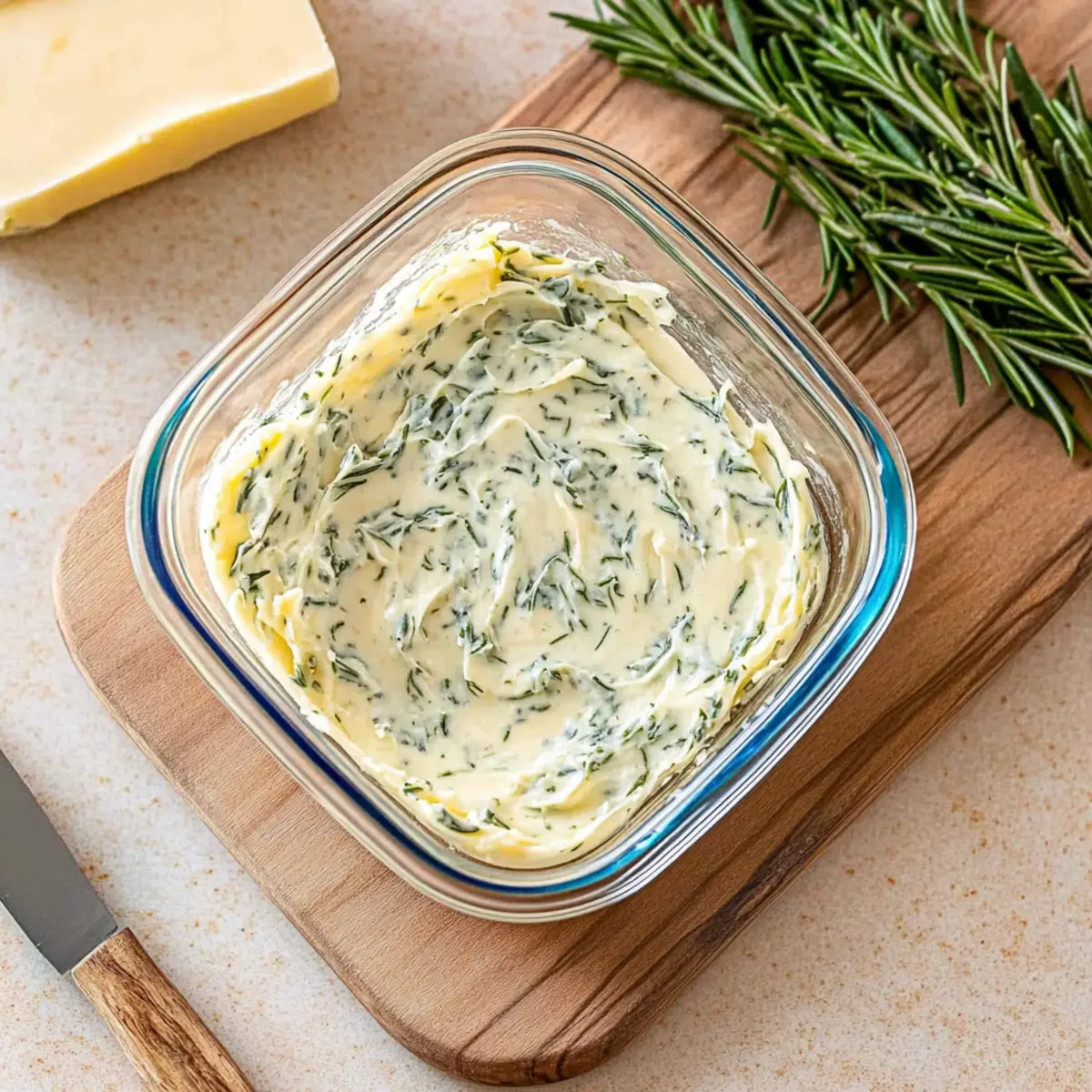
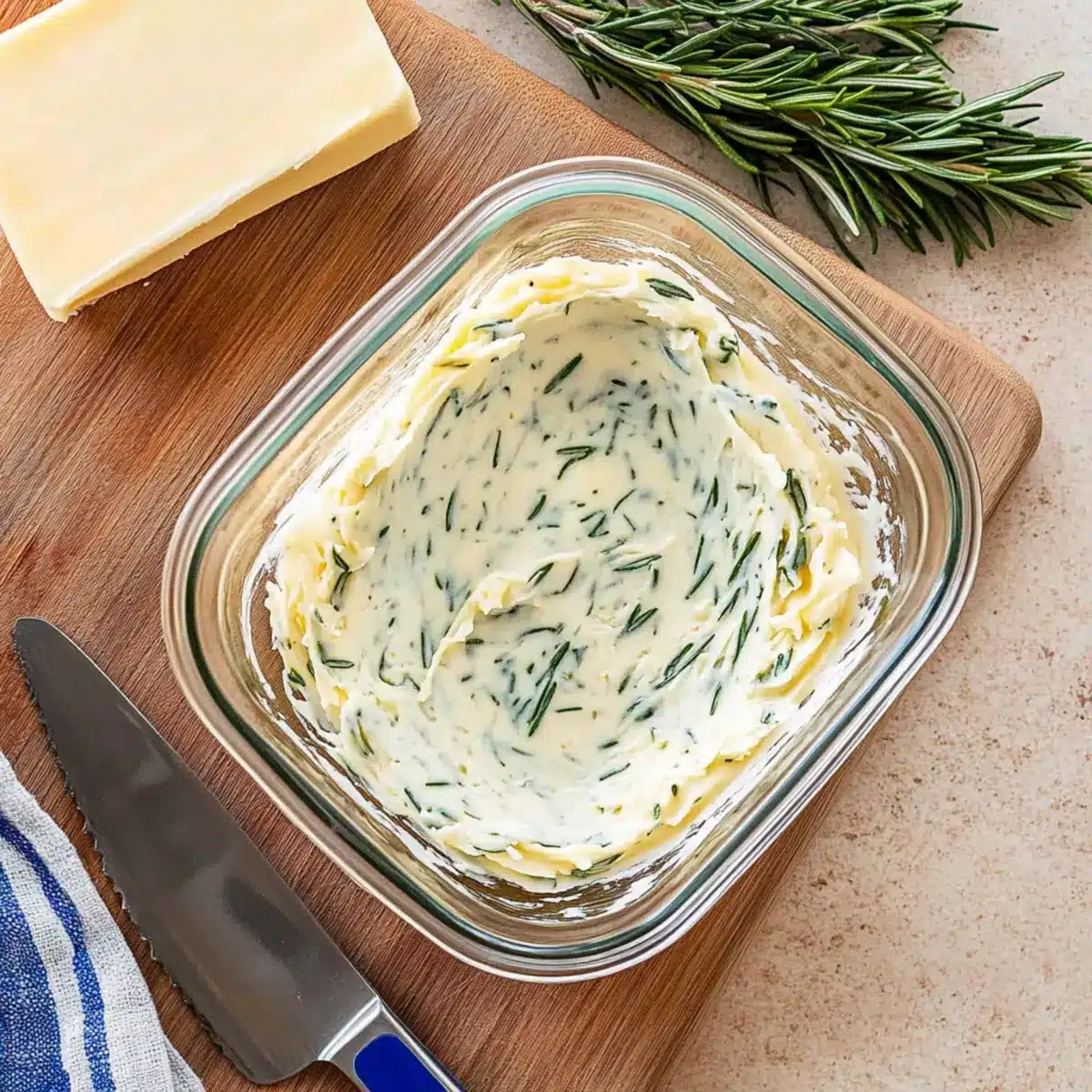
In a mixing bowl, take your softened unsalted butter and add the finely diced rosemary, salt, pepper, and garlic powder. Using a spatula or a hand mixer, blend the ingredients together until they are well combined. Aim for a smooth, creamy consistency where the green flecks of rosemary are evenly distributed throughout the butter, which should take about 2-3 minutes.
Step 2: Transfer the Mixture
Once your rosemary butter is well mixed, it’s time to transfer it. If you prefer a log shape, spoon the mixture onto a piece of plastic wrap. Using the wrap, roll the mixture tightly into a log shape, twisting the ends to seal it securely. If using an airtight container, simply scoop the butter into it and smooth the top with a spatula for an even surface.
Step 3: Chill for Flavor
To enhance the flavors of your homemade rosemary butter, place it in the refrigerator. Allow it to chill for at least 30 minutes to 1 hour. This cooling period helps the flavors meld together beautifully, resulting in a butter that’s bursting with aromatic goodness when you use it in your dishes.
Step 4: Store for Later Use
Once chilled and firm, your rosemary butter can be stored in the refrigerator for up to a week. For longer storage, consider wrapping it in parchment paper and placing it in your freezer, where it can last for up to three months. This makes it easy to have delicious rosemary butter on hand whenever you need to elevate your meals!
Step 5: Serve and Enjoy
Your homemade rosemary butter is now ready to complement a variety of dishes. Spread it on warm bread, dollop it over grilled meats, or mix it into roasted vegetables. With its creamy texture and rich flavor, this versatile rosemary butter will surely become a beloved addition to your culinary repertoire!
Rosemary Butter Variations & Substitutions
Feel free to let your creativity shine and customize this rosemary butter to suit your taste buds!
-
Herb Swap: Substitute thyme for rosemary to enjoy a different herbal twist that’s equally fragrant and delicious.
-
Citrusy Lift: Add a pinch of lemon zest to the mixture for a refreshing zing, brightening up the butter’s herbal notes beautifully.
-
Spicy Kick: Incorporate chili flakes for a burst of heat that pairs perfectly with grilled meats or roasted veggies, adding an exciting flavor dimension.
-
Nutty Richness: Toss in finely chopped nuts like walnuts or pecans for an unexpected crunch that complements the smooth butter texture wonderfully.
-
Savor the Garlic: Use fresh minced garlic instead of garlic powder for a more pronounced savory punch, perfect for garlic lovers!
-
Smoky Flavor: Mix in smoked paprika for a hint of smokiness, elevating your butter’s complexity and making it a great spread for burgers or steaks.
-
Cheesy Delight: Blend in grated Parmesan cheese for a cheesy garlic herb butter that’s simply irresistible on warm bread or pasta dishes.
-
Sweet Touch: For a unique sweetness, add a teaspoon of honey or maple syrup to create a delightful contrast, perfect for spreading on biscuits or warm scones.
These variations will allow you to tailor your rosemary butter to suit different dishes and occasions. Just like my Brown Butter Mashed potatoes or Peanut Butter Jelly, the possibilities are endless! Enjoy experimenting!
Expert Tips for Rosemary Butter
• Use Softened Butter: Ensure your butter is at room temperature for easy mixing, resulting in a smooth, consistent texture.
• Mix Thoroughly: Blend your ingredients until they’re well incorporated; uneven mixing can lead to clumps instead of creamy rosemary butter.
• Chill for Flavor: Refrigerate the butter for at least 30 minutes after mixing to allow the flavors to meld together beautifully.
• Wrap Smartly: For easier slicing, roll your butter into a log shape before chilling. Parchment paper can help when freezing for longer storage.
• Customize It: Experiment with herbs or spices; rosemary butter can easily be adapted with flavors like thyme or chili flakes for a unique twist!
Make Ahead Options
This Easy Homemade Rosemary Butter is a fantastic choice for those looking to save time in the kitchen! You can prepare the butter up to 3 days in advance by mixing the ingredients as directed and then storing it in an airtight container or rolled into a log and wrapped in plastic wrap. To maintain its fresh flavor, keep the rosemary butter in the refrigerator. When you’re ready to use it, simply slice off the desired amount and allow it to sit at room temperature for 15-20 minutes before serving to ensure it spreads easily. This way, you’ll always have a delicious herbal infusion ready to elevate your meals!
What to Serve with Homemade Rosemary Butter?
This delightful compound butter can elevate your dining experience and inspire a variety of delicious pairings.
-
Warm Ciabatta Rolls: The crispy crust and soft interior of ciabatta absorb the rich rosemary butter beautifully, making every bite heavenly.
-
Grilled Steak: Pairing with juicy steak, the herby flavor of the butter melts in, cutting through the meat’s richness and enhancing every bite.
-
Roasted Vegetables: Drizzle over roasted carrots or asparagus to add a savory and aromatic twist, turning simple veggies into showstoppers.
-
Baked Potatoes: A dollop of rosemary butter melting into a hot baked potato adds creaminess and a fragrant depth, perfect for comfort food lovers.
-
Pasta Dishes: Toss with warm pasta and a sprinkle of parmesan for a quick and elegant dish that highlights the butter’s fresh flavors.
-
Herbed Rice: Stirring this butter into fluffy rice infuses it with a wonderful rosemary aroma, creating a stunning side that complements any main course.
-
Grilled Chicken: Chicken breasts brushed with rosemary butter before grilling become moist and flavorful, providing a deliciously herby twist on a classic.
-
Mushroom Risotto: The creamy texture of risotto paired with rosemary butter creates a luscious dish that’s rich and deeply satisfying.
-
A Glass of Sauvignon Blanc: The crisp acidity of this wine perfectly balances the richness of the butter, making for an elegant pairing.
-
Lemon Tart Dessert: End your meal on a refreshing note; the brightness of a lemon tart beautifully contrasts with the savory rosemary butter experience.
How to Store and Freeze Rosemary Butter
-
Room Temperature: Rosemary butter can stay at room temperature for up to 2 hours when serving, but it’s best kept cold to maintain freshness.
-
Fridge: Store your homemade rosemary butter in an airtight container in the fridge, where it will keep for up to a week. This way, you can easily access it for use anytime.
-
Freezer: For long-term storage, wrap the butter in parchment paper or plastic wrap and place it in the freezer. It can last for up to three months, ensuring you always have flavorful rosemary butter on hand.
-
Reheating: When ready to use, simply remove the butter from the fridge or freezer and allow it to soften at room temperature before using. This ensures that the rich flavors are ready to enhance your dishes!
Rosemary Butter Recipe FAQs
What type of butter should I use for rosemary butter?
You should use unsalted butter that is softened at room temperature. This allows for easier mixing and lets you control the saltiness of your rosemary butter, giving your recipe the perfect balance of flavors.
How long can I store homemade rosemary butter?
Your homemade rosemary butter can be stored in the refrigerator for up to a week in an airtight container. If you want to keep it longer, consider freezing it, where it will last for up to three months. That way, you’ll always have delicious rosemary butter at your fingertips!
Can I freeze rosemary butter? How should I do it?
Absolutely! To freeze rosemary butter, first, shape it into a log using plastic wrap or transfer it to an airtight container. For optimal quality, wrap the log in parchment paper before placing it in a freezer-safe bag. When ready to use, just take it out and let it sit at room temperature until soft, or slice off what you need and return the rest to the freezer.
What if my rosemary butter feels grainy after mixing?
If your rosemary butter has a grainy texture, it might be due to the butter being too cold when you started mixing. Ensure your butter is softened at room temperature for a smoother consistency. Additionally, mix thoroughly until all ingredients are well incorporated, which helps achieve that creamy texture you desire.
Is rosemary butter safe for pets?
While rosemary itself is generally safe for pets, butter is high in fat and should only be given in moderation. If your pet has dietary concerns or allergies, it is best to consult your veterinarian before serving any human food, including rosemary butter. Always prioritize your pet’s health!
Can I customize the flavor of my rosemary butter?
Very! Feel free to experiment with different herbs or spices based on your taste preferences. You can substitute rosemary with thyme or basil, or even add a touch of lemon zest or chili flakes for a unique twist. Have fun with it, and make it your own!
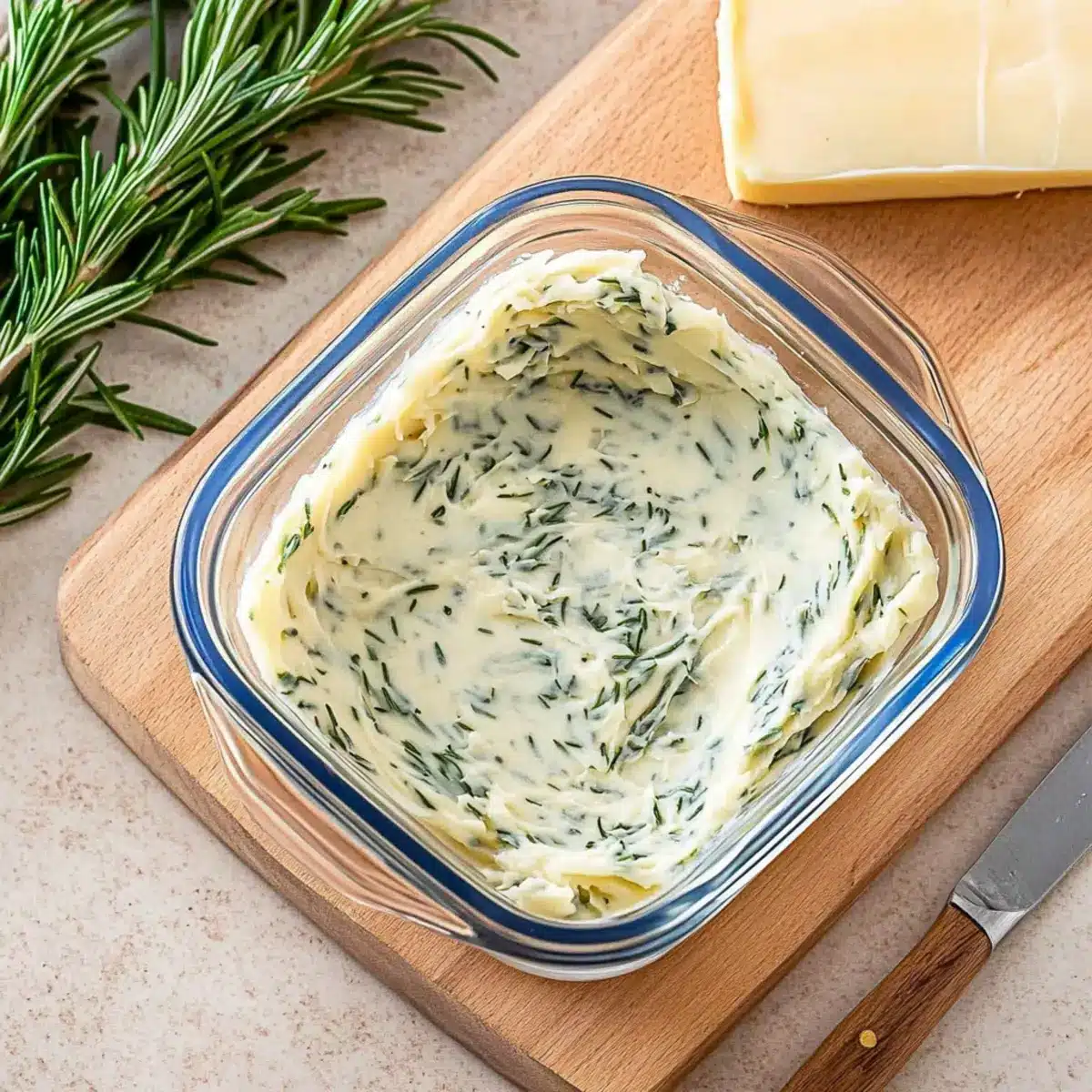
Delicious Homemade Rosemary Butter to Elevate Every Meal
Ingredients
Equipment
Method
- In a mixing bowl, combine softened unsalted butter, finely diced rosemary, salt, pepper, and garlic powder. Blend until smooth and creamy, about 2-3 minutes.
- Transfer the mixture onto plastic wrap and roll tightly into a log shape, twisting the ends to seal. Alternatively, scoop into an airtight container and smooth the top.
- Chill in the refrigerator for at least 30 minutes to 1 hour to allow flavors to meld.
- Once firm, store the butter in the refrigerator for up to a week or wrap in parchment paper for freezing up to three months.
- Your rosemary butter is now ready to use! Spread on warm bread, dollop over grilled meats, or mix into roasted vegetables.
Leave a Reply