
As I savored the sweet citrus aroma wafting through my kitchen, I felt a wave of nostalgia wash over me, reminding me of the joyous Easter gatherings with my family. Today, I’m excited to share my cherished recipe for Traditional Pane di Pasqua, a delightful Italian Easter bread that captures the essence of celebration in every delicious bite. This festive bread not only brings a sense of tradition to your table but is also incredibly versatile—perfectly adaptable for gluten-free diets. Whether you’re hosting a brunch or simply enjoying a cozy afternoon with loved ones, Pane di Pasqua is sure to be a crown jewel, inviting smiles and happy spirits. Curious about how to braid this beautiful bread and brighten your Easter festivities? Let’s dive into the details!
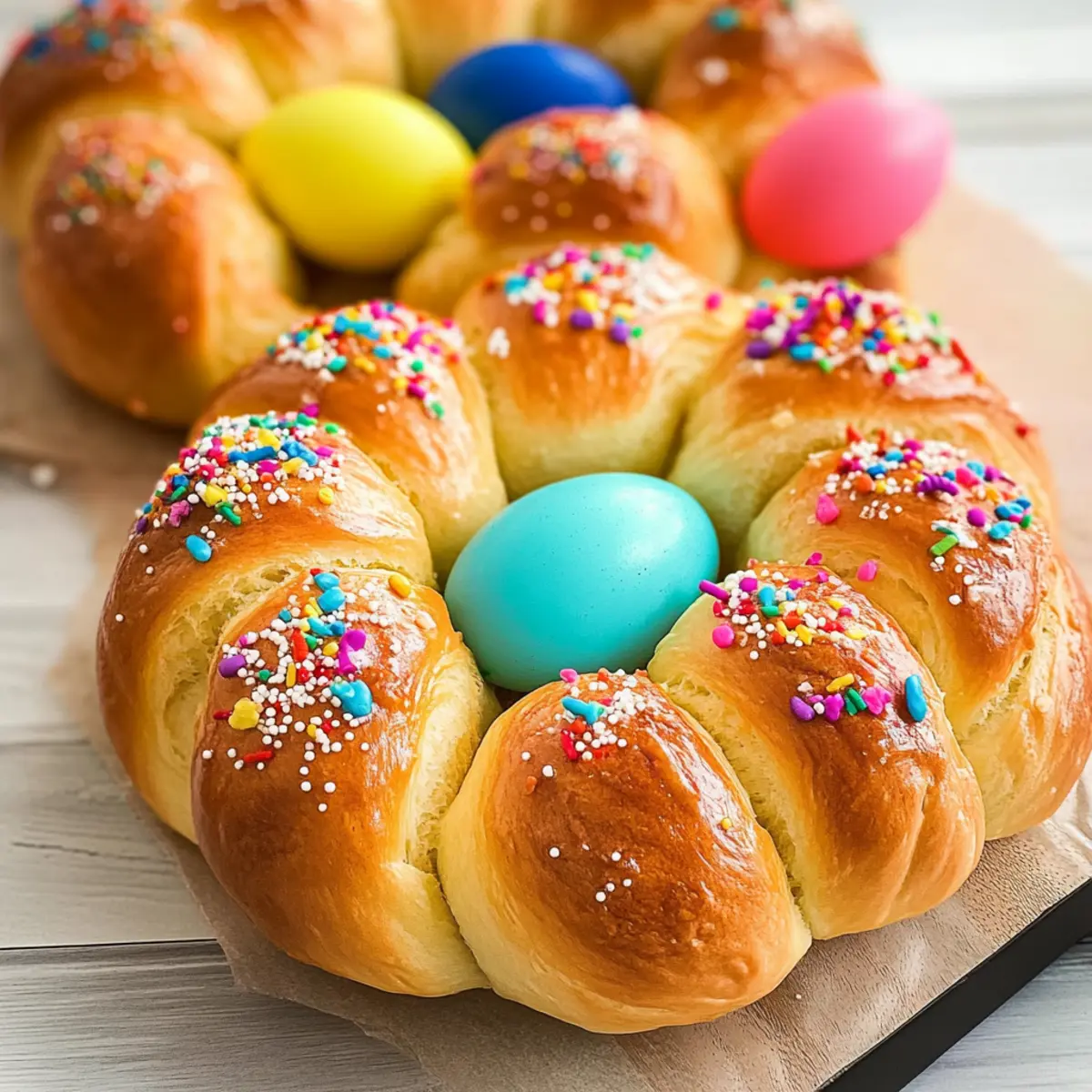
Why is Pane di Pasqua special?
Tradition Reimagined: This classic Italian Easter bread is steeped in rich history, making it a festive centerpiece for any holiday table.
Delightful Aroma: The combination of sweet, citrusy notes from lemon and vanilla fills your kitchen, inviting everyone in.
Customizable Options: Easily adapt this recipe for gluten-free diets or experiment with flavored extracts for a personal touch.
Visual Appeal: Its colorful sprinkles and decorative dyed eggs not only enhance the bread’s charm but also make it a feast for the eyes.
Warm and Comforting: Enjoy it straight from the oven, slathered in butter or jam, to awaken holiday nostalgia.
Perfect for Gatherings: Whether it’s Easter brunch or a family dinner, Pane di Pasqua brings joy and connection with every bite. Discover how to serve it with mimosas for the perfect pairing!
Pane di Pasqua Ingredients
For the Dough
• Milk – Provides moisture and helps activate the yeast; whole or almond milk can be used.
• Active Dry Yeast – Causes the dough to rise; instant yeast is a time-saver as it doesn’t require proofing.
• Granulated Sugar – Adds sweetness and enhances flavor; coconut sugar can be a less refined alternative.
• Bread Flour – Provides structure and chewiness; all-purpose flour can substitute in a pinch.
• Kosher Salt – Balances the sweetness of the bread; use less if using fine table salt.
• Lemon Zest – Infuses fresh citrus flavor; try orange zest for a unique twist.
• Unsalted Butter – Adds richness to the dough; margarine works if butter is unavailable.
• Eggs – Essential for binding and structure; aquafaba or chia seeds make good vegan substitutes.
• Vanilla Extract – Enhances the overall flavor; almond extract adds a lovely nutty note.
For Decoration
• Colored Raw Eggs – These decorative elements represent new life; dyed raw eggs can be used or omitted if desired.
• Sprinkles – For visual appeal; check they are gluten-free if necessary.
Create your delightful Pane di Pasqua this Easter and embrace a tradition that fills both hearts and homes with warmth and joy!
Step‑by‑Step Instructions for Pane di Pasqua
Step 1: Prepare the Dough
Start by warming 1 cup of milk until it’s just lukewarm, then stir in ¼ cup of granulated sugar and 2¼ teaspoons of active dry yeast. Allow this mixture to sit for about 5-10 minutes until it becomes frothy. In a separate bowl, combine 4 cups of bread flour, ½ teaspoon of kosher salt, and the zest of one lemon. Make a well in the flour mixture, then add the yeast mixture, ¼ cup of melted unsalted butter, 2 eggs, and 1 teaspoon of vanilla extract. Mix until a soft dough forms.
Step 2: Knead the Dough
Transfer the dough onto a floured surface and begin kneading it for 8-10 minutes, or until the dough is smooth and elastic. If the dough feels sticky, sprinkle a little more flour as needed. You can also use a stand mixer with a dough hook for this process to save time and effort. Once kneaded, shape the dough into a ball and place it in a greased bowl, turning it to coat all sides.
Step 3: First Rise
Cover the bowl with a clean kitchen towel or plastic wrap and place it in a warm area. Let the dough rise for about 1 hour or until it has doubled in size. This is when the magic of the Pane di Pasqua begins, as the yeast works its wonders. Once ready, you’ll notice the dough will have risen substantially, feeling light and airy when you gently poke it.
Step 4: Shape the Bread
After the first rise, punch down the dough to release air bubbles and divide it into 12 equal portions. Roll each portion into long ropes about 12 inches in length. Twist two ropes together to form a braid, then shape this braid into a circle, pinching the ends to secure. Place each formed ring onto a baking sheet lined with parchment paper, leaving space between them.
Step 5: Second Rise
Cover the shaped bread rings with a towel and allow them to rise again for about 45 minutes, or until they’ve puffed up. You’ll know they are ready when they are noticeably larger and have a soft and pillowy texture. This final rise is crucial for achieving that perfect lightness in your Pane di Pasqua.
Step 6: Preheat Oven
While the bread rings are rising, preheat your oven to 350°F (175°C). Make sure the oven reaches the right temperature before you bake for even cooking. This ensures that the outer crust of the Pane di Pasqua will develop that beautiful golden hue when baked.
Step 7: Decorate
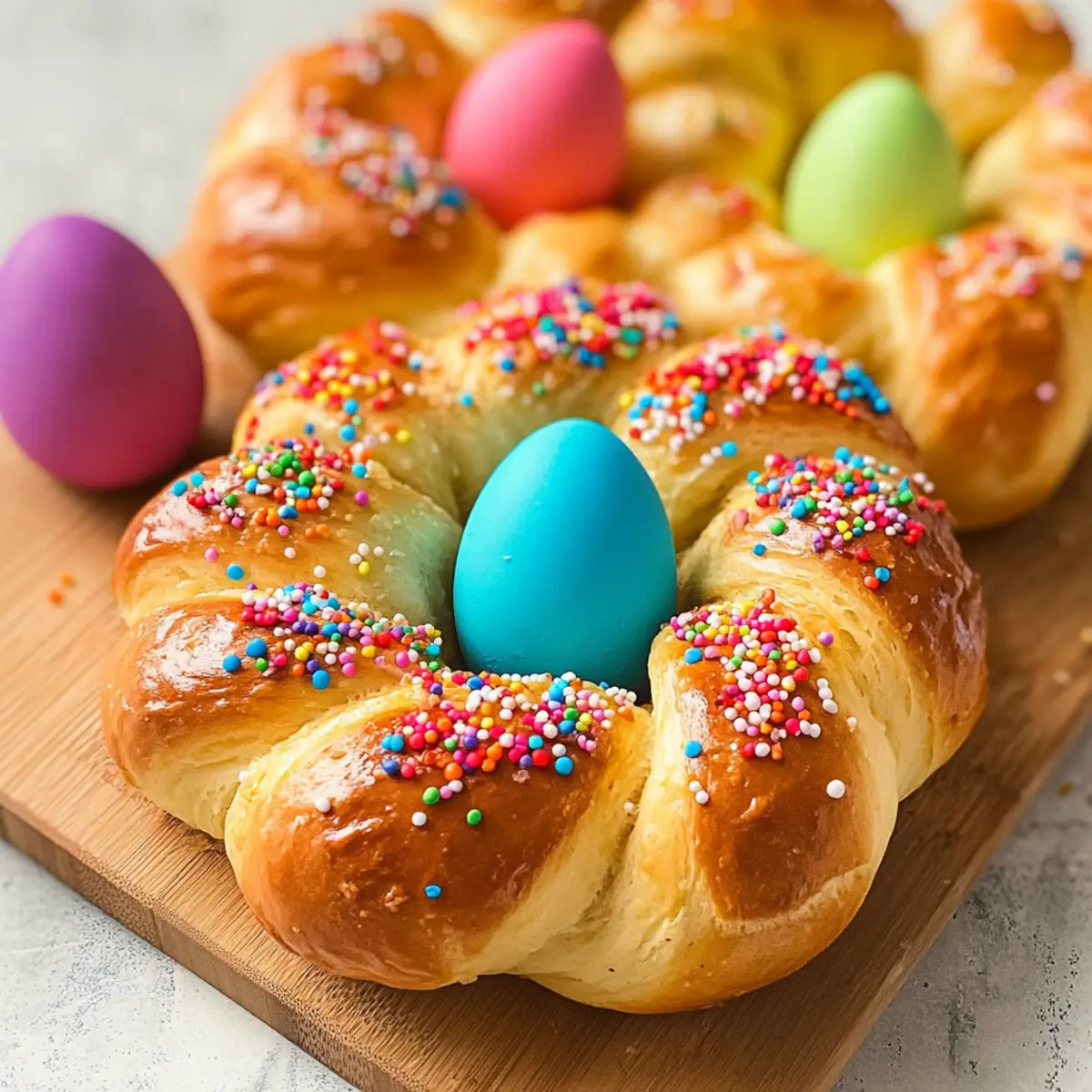
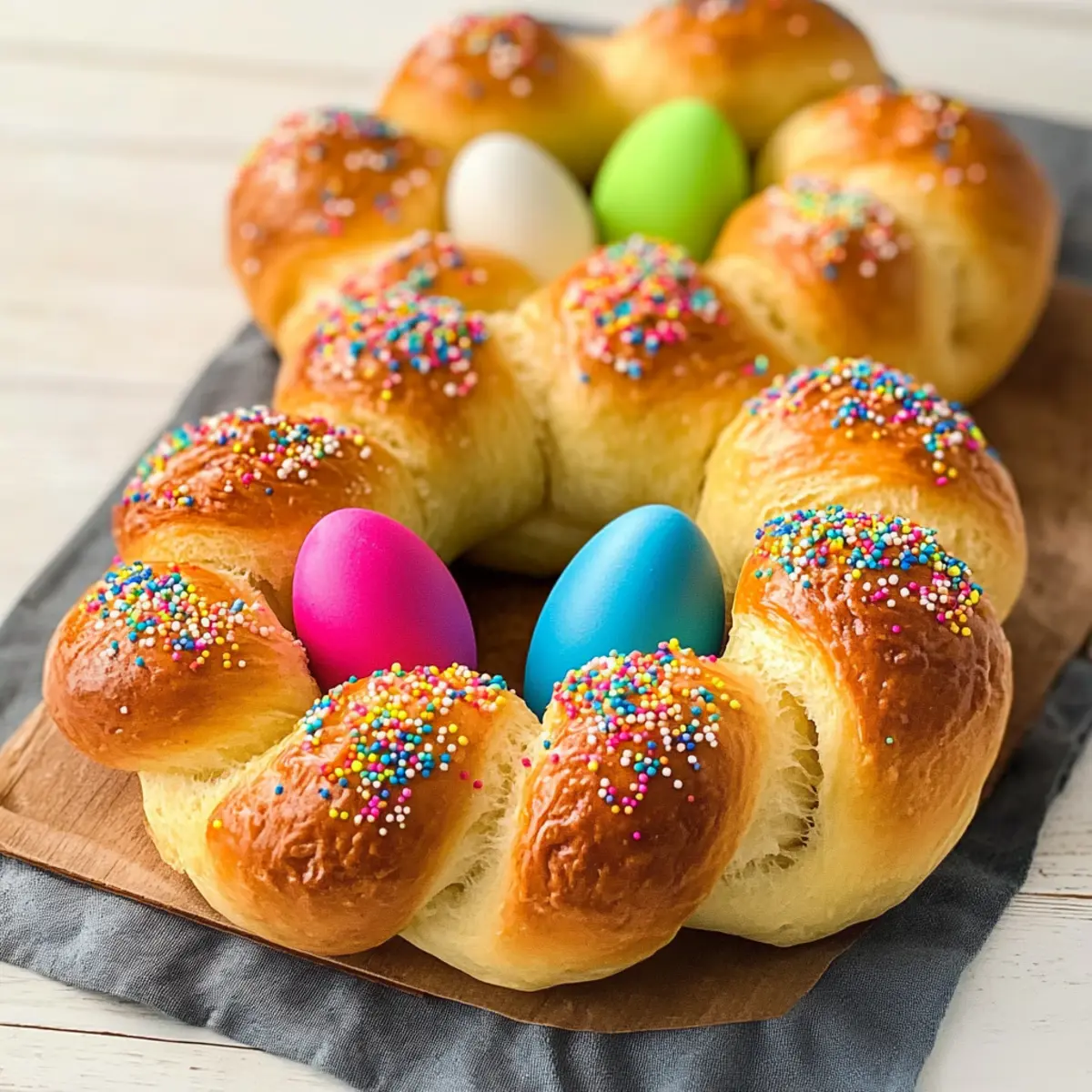
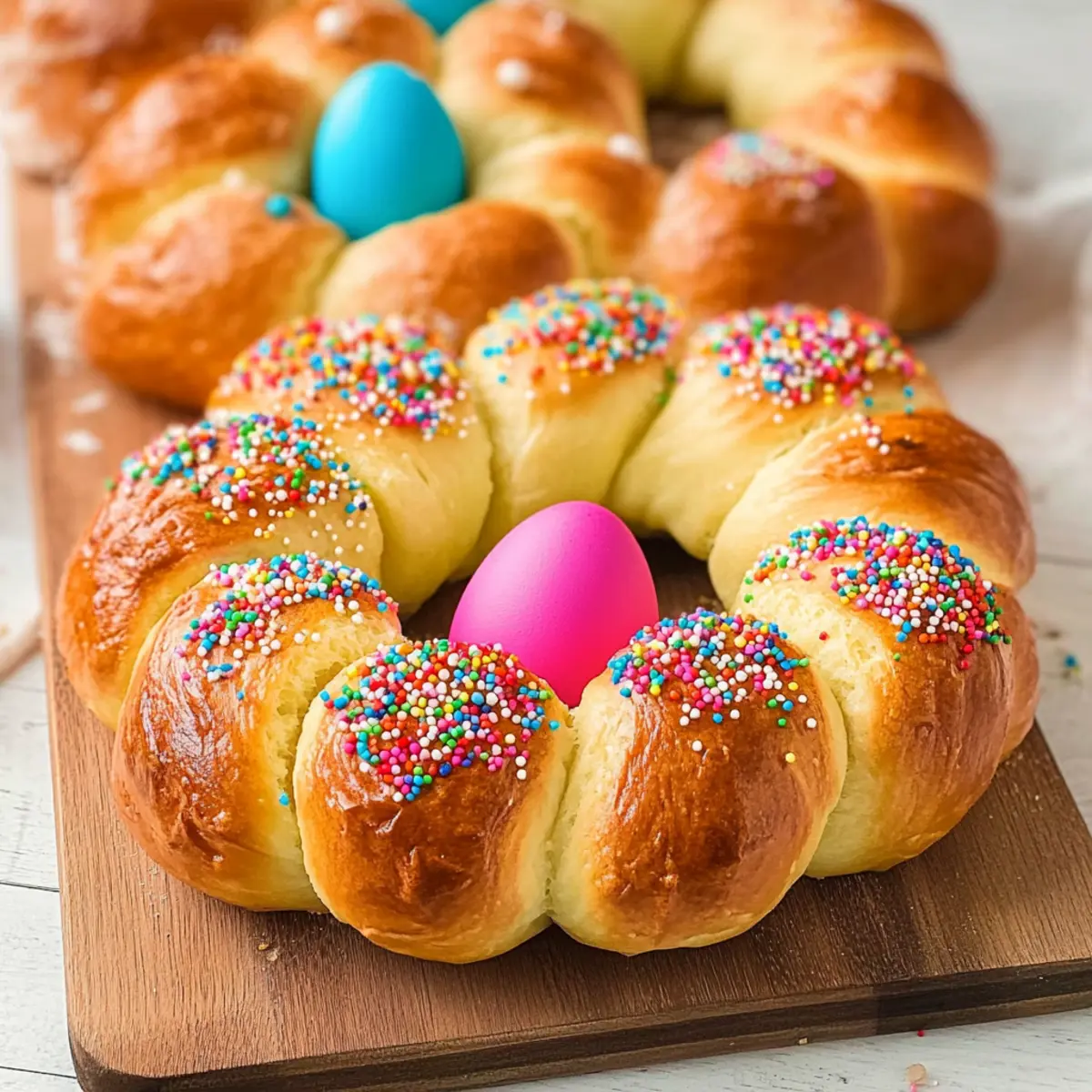
Once the rings have completed their second rise, carefully brush each one with an egg wash made from one beaten egg. This will help achieve a lovely shine. Sprinkle colorful sprinkles over the top, and gently nestle a dyed raw egg in the center of each ring—this decoration is both beautiful and traditional.
Step 8: Bake
Place the baking sheet in the oven and bake the Pane di Pasqua for about 20-25 minutes. Keep an eye on them; they are done when they turn golden brown and sound hollow when tapped on the bottom. Allow the bread to cool slightly on a wire rack, releasing its delightful aroma and preparing it for serving.
What to Serve with Traditional Pane di Pasqua?
As the sweet aroma of Pane di Pasqua fills your home, it’s time to think about delightful pairings that will elevate your Easter feast.
-
Creamy Ricotta Cheese:
Offers a rich creaminess to balance the bread’s sweetness; spread it over warm slices for a delectable treat. -
Fresh Fruit Salad:
A refreshing addition featuring seasonal fruits adds brightness and a touch of natural sweetness alongside the rich bread. -
Herb-Infused Olive Oil:
Drizzle this alongside slices for an aromatic twist, enhancing the flavors with fresh herbal notes and a touch of sophistication. -
Honey or Apricot Jam:
Sweet toppings complement the slight sweetness of the bread, enhancing its festive spirit and creating a fabulous contrast in flavors. -
Espresso or Coffee:
Serve a cup of bold espresso to awaken the senses, providing a perfect contrast to the sweet serenity of Pane di Pasqua. -
Sparkling Wine or Mimosas:
Bubbles bring a sense of celebration, making them the ideal drink choice to toast Easter with style and zest.
Explore these suggestions to craft a memorable meal that binds family together and celebrates the joy of the holiday!
Pane di Pasqua Variations & Substitutions
Feel free to put your own spin on this delightful Italian Easter bread with these fun variations and substitutions!
- Gluten-Free: Use a gluten-free flour blend suitable for baking to make this festive treat accessible for everyone.
- Dairy-Free: Swap whole milk with almond milk or oat milk, ensuring moisture without the dairy.
- Sugar-Free: For a healthier option, replace granulated sugar with a natural sweetener like honey or maple syrup.
- Citrus Twist: Substitute lemon zest for orange or lime zest to give your bread a unique flavor twist.
- Add Fruits: Fold in raisins, dried cranberries, or candied citrus peel to add bursts of sweetness and texture.
For a delightful customization, consider experimenting with flavored extracts or using a coconut sugar option for a touch of caramel notes in your dough.
- Nutty Flavor: Enhance the classic taste by adding a teaspoon of almond extract alongside the vanilla.
- Vegan Swap: Replace eggs with aquafaba or chia seeds mixed with water for a fluffy dough without animal products.
These variations not only open up your kitchen to new flavors but also make everyone feel included at the table during Easter celebrations!
Expert Tips for Pane di Pasqua
-
Room Temperature Ingredients: Ensure all ingredients, especially eggs and butter, are at room temperature for a smooth and pliable dough texture.
-
Careful Kneading: Knead the dough thoroughly for 8-10 minutes; under-kneading can result in a dense bread. Aim for a soft, elastic consistency.
-
Proper Rising: Allow the dough to rise in a warm spot to gain maximum volume. Avoid drafts that can slow down the yeast activity.
-
Even Baking: To bake evenly, rotate the baking sheet halfway through the process. This ensures that every part of your Pane di Pasqua bakes uniformly.
-
Ingredient Substitutions: Don’t hesitate to experiment with substitutes like coconut sugar or gluten-free flour; just remember they may affect the flavor and texture slightly.
-
Delicious Additions: Consider adding dried fruits or flavored extracts to the dough for a personalized twist on the traditional Pane di Pasqua.
Storage Tips for Pane di Pasqua
- Room Temperature: Store your Pane di Pasqua in an airtight container at room temperature for up to 3 days to maintain its delightful texture and flavor.
- Fridge: If you need to keep it longer, wrap the bread tightly in plastic wrap and store it in the fridge for up to 5 days, though this might slightly alter the texture.
- Freezer: For long-term storage, freeze the bread in slices or whole by wrapping it in plastic wrap and placing it in a freezer bag. It can stay fresh for up to 2 months.
- Thawing: To enjoy your frozen Pane di Pasqua, thaw it at room temperature for a few hours or overnight, then warm it in the oven for a few minutes to restore its freshness.
Make Ahead Options
These delightful Pane di Pasqua are perfect for busy home cooks looking to save time. You can prepare the dough up to 24 hours in advance; simply follow the instructions until after the first rise, then punch it down and shape it into rings. Wrap each ring tightly in plastic wrap and refrigerate. This way, the dough will maintain its quality and flavors. When you’re ready to serve, take the rings out, allow them to rise for about 45 minutes, then decorate and bake as per the original instructions. Enjoy the convenience of having a stunning Easter bread ready with minimal effort on the day of your celebration!
Pane di Pasqua Recipe FAQs
What type of milk should I use for Pane di Pasqua?
Absolutely! You can use whole or reduced-fat milk for moistness and activating the yeast. If you’re looking for a non-dairy alternative, almond milk works beautifully in this recipe!
How should I store Pane di Pasqua after baking?
To keep your Pane di Pasqua fresh, store it in an airtight container at room temperature for up to 3 days. If you want to keep it for longer, wrap it tightly in plastic wrap and refrigerate it for up to 5 days, although this may alter the texture slightly.
Can Pane di Pasqua be frozen?
Yes, absolutely! For freezing, wrap your Pane di Pasqua tightly in plastic wrap and then place it in a freezer bag. It can be frozen for up to 2 months. When you’re ready to enjoy it, thaw it at room temperature for a few hours or overnight, then warm it in the oven for a few minutes to restore its freshness.
What should I do if my dough doesn’t rise?
If your dough isn’t rising, it may be due to the yeast being inactive. Ensure your yeast is fresh and check if you’re using warm, not hot, milk. If it’s been sitting for too long and hasn’t foam, it might be time to start over. Make sure your dough is in a warm, draft-free place—rising typically takes about an hour.
Is there a gluten-free option for Pane di Pasqua?
Very much so! You can easily adapt this recipe by using a gluten-free flour blend designed for baking. Make sure to check that your other ingredients, like sprinkles, are also gluten-free. Enjoy experimenting with flavors, and don’t hesitate to reach out if you have more questions!
Can I modify the flavors in Pane di Pasqua?
Absolutely! You can switch the vanilla extract for almond extract for a nutty twist or add dried fruits like raisins or candied citrus peel to the dough for added sweetness and flavor. This bread is beautifully versatile!
Delightful Pane di Pasqua: Your Festive Easter Treat
Ingredients
Equipment
Method
- Warm 1 cup of milk until lukewarm, stir in ¼ cup of sugar and 2¼ teaspoons of yeast. Let sit for 5-10 minutes until frothy.
- In a bowl, combine 4 cups of flour, ½ teaspoon of salt, and lemon zest. Make a well in the center.
- Add the yeast mixture, ¼ cup melted butter, 2 eggs, and 1 teaspoon of vanilla to the well. Mix to form a soft dough.
- Knead on a floured surface for 8-10 minutes until smooth and elastic. Shape into a ball and place in a greased bowl.
- Cover and let rise in a warm area for about 1 hour until doubled in size.
- Punch down the dough, divide into 12 equal portions, and roll into 12-inch ropes. Braid two ropes together and form into a circle.
- Place each ring on a parchment-lined baking sheet and cover. Allow to rise for 45 minutes until puffed up.
- Preheat oven to 350°F (175°C).
- Brush with an egg wash made from 1 beaten egg, sprinkle with sprinkles, and place a dyed egg in the center of each ring.
- Bake for 20-25 minutes until golden brown and hollow when tapped. Cool slightly on a wire rack.
Leave a Reply