
In my quest for a satisfying dinner that’s both nourishing and flavor-packed, I stumbled upon a culinary gem: Spaghetti Squash Pad Thai. This recipe transforms the classic comfort of Pad Thai into a macro-friendly delight that’s low-carb and gluten-free. With tender strands of spaghetti squash taking center stage, it’s not only quick to prepare but also versatile enough to accommodate any protein or veggie you have on hand. The vibrant colors and tantalizing aromas create a dish that promises to awaken your taste buds, making it an instant favorite for busy weeknights. Ready to ditch the takeout and whip up this wholesome twist on an old favorite? Let’s dive into the magic of Spaghetti Squash Pad Thai!
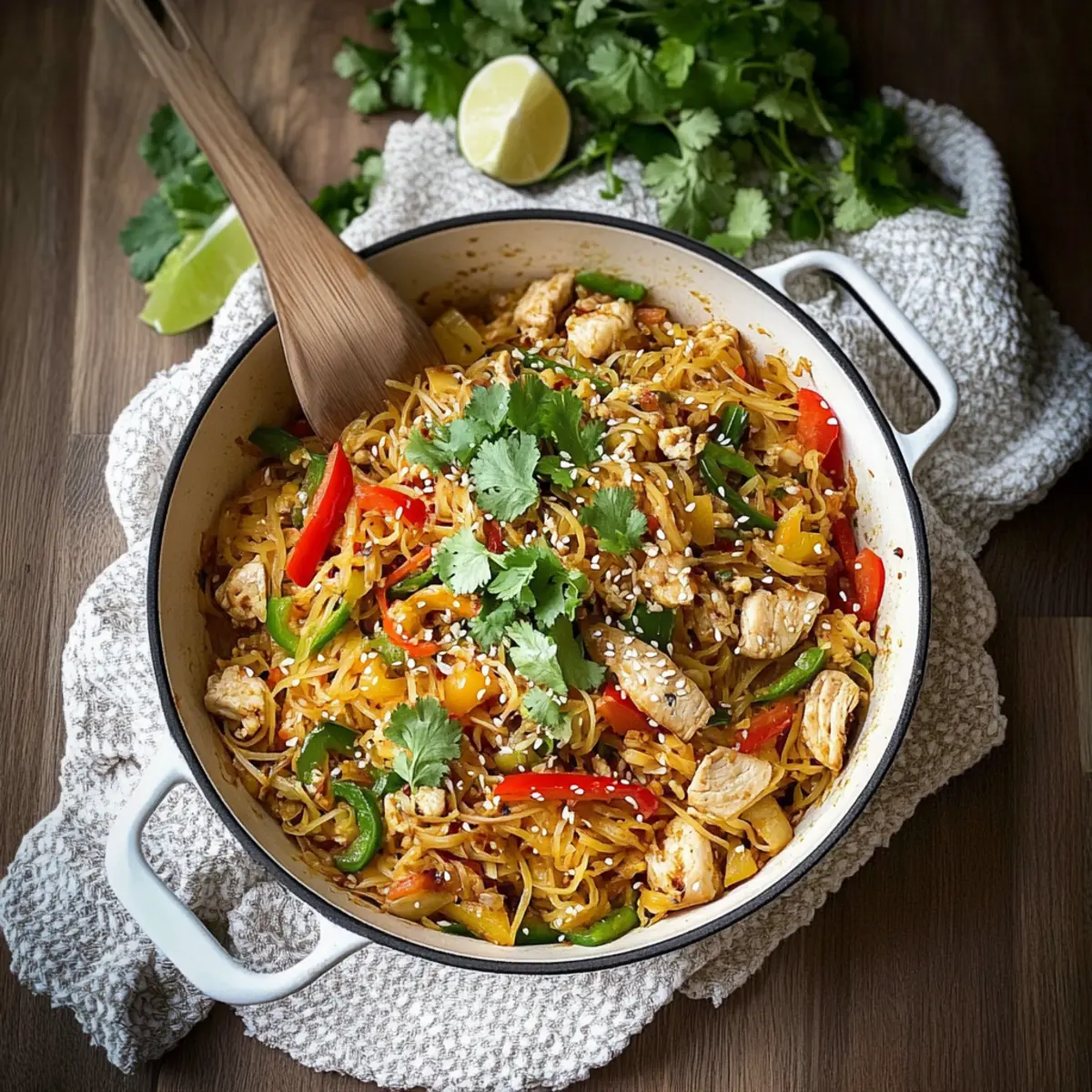
What’s Special About This Pad Thai?
Nourishing Innovation: This Spaghetti Squash Pad Thai redefines a classic by using a low-carb, gluten-free base that satisfies without the guilt.
Customizable Delight: You can easily switch out proteins or veggies, making it suitable for everyone, whether you’re a meat lover or a vegetarian.
Quick Preparation: Whip it up in just a few steps for a delicious dinner that won’t take all night, letting you savor life’s moments.
Flavor Explosion: Packed with the vibrant, umami flavors of ginger, garlic, and soy, this dish is sure to tantalize your taste buds and impress your guests.
Healthy Comfort Food: Enjoy the taste of comfort food while nourishing your body with about 339 calories and 37g of protein per serving! If you’re looking for more comforting pasta dishes, check out Spaghetti Meatballs Warm.
Perfect for Meal Prep: Make a big batch and enjoy leftovers throughout the week, making your life easier while still indulging in great flavors!
Spaghetti Squash Pad Thai Ingredients
• Gather everything you need for a delightful cooking experience!
-
For the Base
-
Spaghetti Squash – A low-carb alternative to noodles; consider microwaving for quicker prep.
-
Chicken Breasts – Lean protein option; swap with tofu or shrimp for a different twist.
-
For the Seasoning
-
Salt – Elevates dish flavors; adjust to taste.
-
Pepper – Freshly ground adds a nice kick; use white pepper for subtlety.
-
Garlic Powder – For an easy depth of flavor if fresh garlic isn’t on hand.
-
For the Veggies
-
Bell Pepper – Sweet and crunchy; any color works for a colorful dish.
-
White Onion – Creates an aromatic base; try shallots for a sweeter taste.
-
Green Onions – Adds brightness and can be replaced with chives if needed.
-
Carrots – Sweetness and vibrant color; shred or cut into thin strips for best results.
-
Mung Bean Sprouts – Provides a crunchy texture; substitute with more shredded carrots if not available.
-
Shishito Peppers – Optional for spice; use jalapeños for more heat if desired.
-
Cilantro – Fresh herb finish; feel free to omit if you’re not a fan.
-
For the Binding
-
Egg + Egg Whites – Adds richness and binds ingredients together to form a cohesive dish.
-
For the Sauce
-
Soy Sauce – A salty umami flavor enhancer; use tamari for a gluten-free option.
-
Natural Peanut Butter – Adds creaminess and a nutty flavor; almond or sunflower seed butter works for allergies.
-
Rice Vinegar – Provides acidity to balance out flavors beautifully.
-
Ginger – Fresh or frozen; gives a subtle zestiness that complements the dish perfectly.
-
Garlic – Freshly minced enhances the aromatic depth—always a great choice!
-
Honey – Adds a natural sweetness; swap for maple syrup if preferred.
-
Sesame Oil – Optional, but it deepens flavors; drizzle for extra richness.
-
Sriracha – For that kick of spice; adjust according to your heat preference.
This Spaghetti Squash Pad Thai is more than just a meal; it’s an invitation to spice up your weeknight dinners with good nutrition and delightful tastes!
Step‑by‑Step Instructions for Spaghetti Squash Pad Thai
Step 1: Prepare the Spaghetti Squash
Start by preheating your oven to 400°F (200°C). Cut the spaghetti squash in half lengthwise and scoop out the seeds. Drizzle the cut sides with olive oil, season with salt and pepper, and place them cut side down on a baking sheet. Roast for 30-40 minutes until tender. Alternatively, you can microwave it for about 10-15 minutes if you’re short on time.
Step 2: Mix the Sauce Ingredients
In a medium bowl, combine soy sauce, natural peanut butter, rice vinegar, honey, minced garlic, and grated ginger. Whisk these ingredients together until smooth, allowing the peanut butter to fully incorporate into the sauce. Set this combination aside as it will later contribute rich flavors to your Spaghetti Squash Pad Thai.
Step 3: Cook the Chicken
Heat a large skillet or wok over medium-high heat with a tablespoon of oil. Add the diced chicken breasts, seasoning with salt and pepper, and sauté for about 5-7 minutes until the chicken is golden brown and cooked through. Once done, transfer the chicken to a plate and cover to keep warm while you prepare the vegetables.
Step 4: Sauté the Vegetables
Using the same skillet, lower the heat to medium and add another drizzle of oil if necessary. Begin by sautéing the chopped white onion until translucent, about 2-3 minutes. Then, toss in the bell peppers, shredded carrots, and optional shishito peppers, cooking for an additional 4-5 minutes until the vegetables are tender yet still vibrant and crunchy.
Step 5: Incorporate the Eggs
Push the sautéed vegetables to one side of the skillet, creating space for the eggs. Crack in the eggs and egg whites, scrambling them gently in the pan for about 2-3 minutes until just set. Mixing them with the vegetables, let everything combine for another minute to meld the flavors together.
Step 6: Add the Spaghetti Squash and Sauce
Once your spaghetti squash is ready, use a fork to scrape the strands from each half. Add these strands into the skillet along with the prepared sauce. Toss everything together for about 2-3 minutes on medium heat, ensuring that each strand is thoroughly coated, allowing the flavors to blend beautifully.
Step 7: Final Touches and Serve
Return the cooked chicken to the skillet, stirring in chopped green onions and fresh cilantro for brightness. Taste and adjust seasoning if needed, then serve warm. Garnish your Spaghetti Squash Pad Thai with additional herbs or crushed peanuts for added texture and flavor, making it a delightful and satisfying meal!
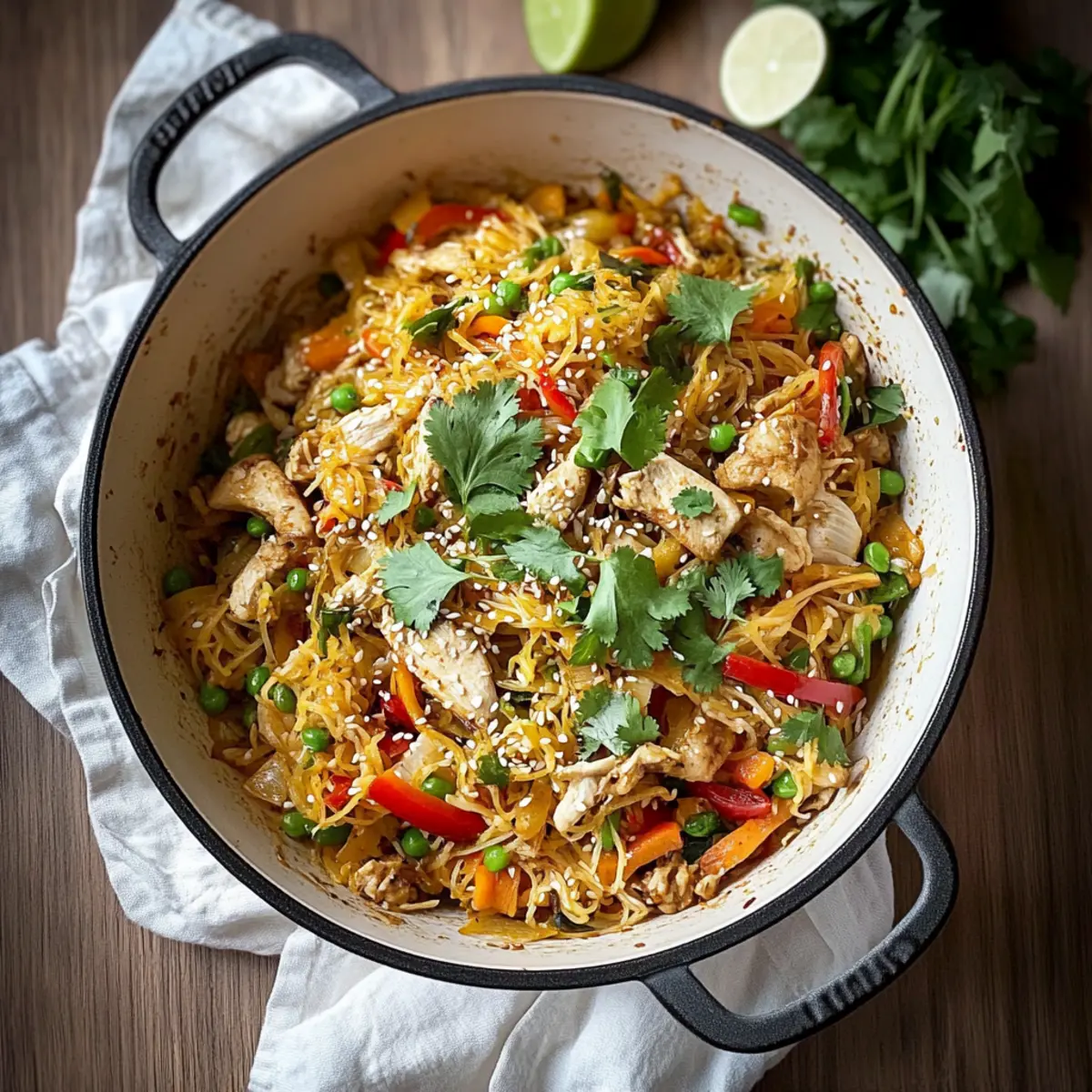
Expert Tips for Spaghetti Squash Pad Thai
-
Perfect Texture: Avoid overcooking the spaghetti squash; al dente strands ensure a satisfying bite instead of mushy noodles.
-
Flavor Adjustment: Customize your heat by varying the sriracha level or substituting milder peppers, like bell peppers, for a gentler taste.
-
Pan Choice: Using a heavy-bottomed skillet or cast iron will provide even heat distribution, making your chicken cook perfectly in this Spaghetti Squash Pad Thai.
-
Sauce Mix: Whisk the sauce ingredients well to prevent clumping of peanut butter; this ensures a luscious, cohesive flavor throughout your dish.
-
Meal Prep Magic: Make a larger batch to store in the fridge; it tastes delicious the next day, giving you a nutritious quick meal option all week!
Make Ahead Options
These Spaghetti Squash Pad Thai are perfect for busy weeknights, allowing you to enjoy a homemade meal without the last-minute rush! You can prepare the spaghetti squash up to 24 hours in advance; just roast it, scoop out the strands, and refrigerate them in an airtight container. Additionally, the sauce can be mixed and stored in the fridge for up to 3 days ahead of time. When you’re ready to serve, simply sauté your chicken and veggies, then combine everything in the skillet along with the prepared sauce and squash. With these make-ahead tips, you’ll have a delicious and nutritious meal waiting for you, just as flavorful as if you made it fresh!
How to Store and Freeze Spaghetti Squash Pad Thai
-
Fridge: Store leftovers in an airtight container for up to 3 days. Reheat in the microwave or on the stove, adding a splash of water to retain moisture.
-
Freezer: You can freeze Spaghetti Squash Pad Thai for up to 2 months. Portion it into freezer-safe containers, label with the date, and ensure it’s tightly sealed to prevent freezer burn.
-
Thawing: To enjoy frozen leftovers, thaw them in the fridge overnight before reheating.
-
Reheating: Gently heat on the stovetop over medium heat, stirring occasionally, until warmed through. Add a bit of soy sauce or sesame oil for extra flavor!
Spaghetti Squash Pad Thai Variations
Feel free to get creative with this recipe, as there are endless ways to customize the flavors and ingredients!
-
Protein Swap: Substitute chicken with shrimp or tofu for a delightful change. Tofu adds a hearty texture, while shrimp gives a lovely seafood twist.
-
Veggie Boost: Add extra veggies like broccoli or snap peas to increase nutrition. A colorful mix enhances not just the taste but also the visual appeal!
-
Nut-Free Option: Replace peanut butter with almond or sunflower seed butter to make it nut-free. This way, you can enjoy the creamy goodness without the allergens.
-
Spicy Kick: Adjust the spice level by increasing sriracha or adding Thai chili peppers. This brings a fiery flair that spice lovers will appreciate!
-
Herb Infusion: Swap out cilantro for Thai basil if you prefer a different herbal note. Just a few leaves will elevate the dish with a fragrant touch.
-
Zesty Citrus: Squeeze lime juice over the finished dish for an extra layer of brightness. The acidity cuts through the richness, making each bite refreshing.
-
Whole Grain Option: For a twist on texture, serve with quinoa instead of spaghetti squash. This adds a nutty flavor while still keeping it healthy!
-
Savory Umami: Use miso paste in the sauce for an added depth of flavor. Just a tablespoon can transform the umami profile into something extraordinary!
For even more pasta inspirations, you might enjoy making this Garlic Butter Squash or give your weeknight some comfort with Spaghetti Meatballs Warm. Happy cooking!
What to Serve with Spaghetti Squash Pad Thai
Brighten your table with delightful dishes that perfectly complement this satisfying, flavor-packed meal.
-
Crispy Spring Rolls: These crunchy delights add a delightful texture and a bite of freshness, perfect for dipping in sweet chili sauce.
-
Asian-Inspired Salad: Tossed greens with sesame dressing bring a refreshing contrast, while the crunch of lettuce and radishes complements the softness of the Pad Thai.
-
Peanut Sauce Dipping Veggies: Thinly sliced cucumbers and carrots served with a creamy peanut sauce echo the flavors in your Pad Thai for a seamless experience.
-
Mango Sticky Rice: This sweet and creamy dessert serves as a perfect finale, balancing the savory flavors of your main dish with its fruity brightness.
-
Chilled Green Tea: A refreshing drink that cools the palate, its subtle flavor helps cleanse your taste buds between bites.
-
Roasted Edamame: Lightly salted and crispy, roasted edamame provides a delicious, protein-packed snack that enhances the meal’s Asian flair.
-
Sesame Noodles: A simple side prepared with nutty sesame oil and chilling in the fridge for an extra cool accompaniment that echoes the warmth of Spaghetti Squash Pad Thai.
-
Fruit Salad: A vibrant mix of seasonal fruits adds a fresh and light note, offering a welcome contrast to the savory richness of your main dish.
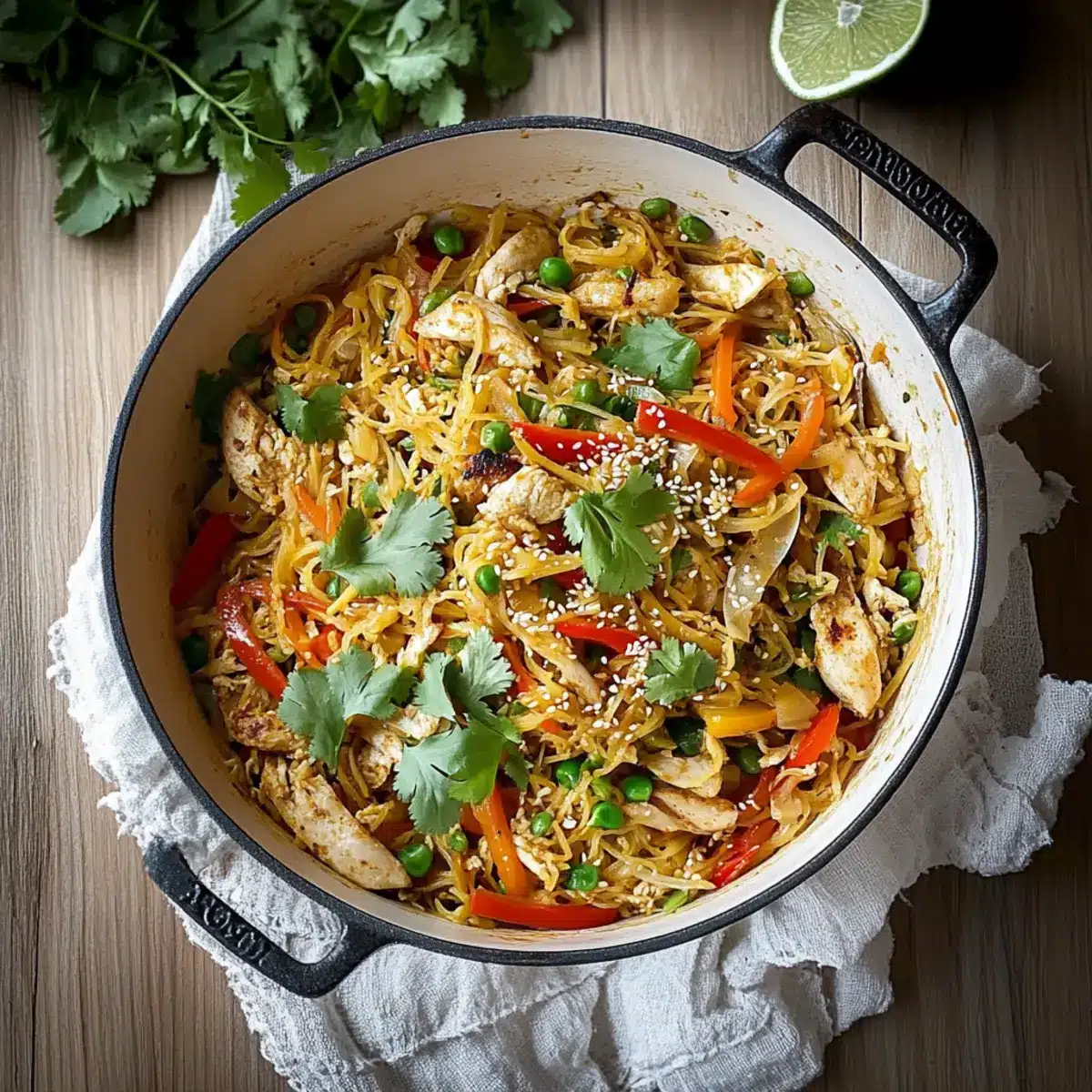
Spaghetti Squash Pad Thai Recipe FAQs
What type of spaghetti squash should I choose?
Absolutely! Look for spaghetti squash that feels heavy for its size and has a smooth, blemish-free skin. Avoid any with dark spots or soft areas, as these may indicate overripeness.
How can I store leftover Spaghetti Squash Pad Thai?
Simply transfer your leftovers to an airtight container and refrigerate them for up to 3 days. When you’re ready to enjoy, reheat in the microwave or in a skillet, adding a splash of water if needed to retain moisture.
Can I freeze Spaghetti Squash Pad Thai?
Yes, you can freeze it for up to 2 months! Portion your Pad Thai into freezer-safe containers, label them with the date, and make sure they’re sealed tight.
How should I thaw and reheat frozen Spaghetti Squash Pad Thai?
To thaw, place it in the refrigerator overnight. When ready to reheat, use a stovetop method, heating over medium while stirring occasionally. If it seems dry, adding a splash of soy sauce or sesame oil can help revive the flavors!
What if I have allergies to peanuts or soy?
No problem! A great substitute for peanut butter is sunflower seed butter or almond butter, and instead of soy sauce, you can use coconut aminos for a soy-free version. Always check labels to ensure they meet your dietary needs.
What should I do if my spaghetti squash turns mushy?
If you find that your spaghetti squash has become mushy, it may have been overcooked. To maintain that lovely al dente texture in the future, keep an eye on your roasting time, aiming for about 30-40 minutes in the oven, depending on the size. A fork should easily scrape the strands without excessive squishiness!
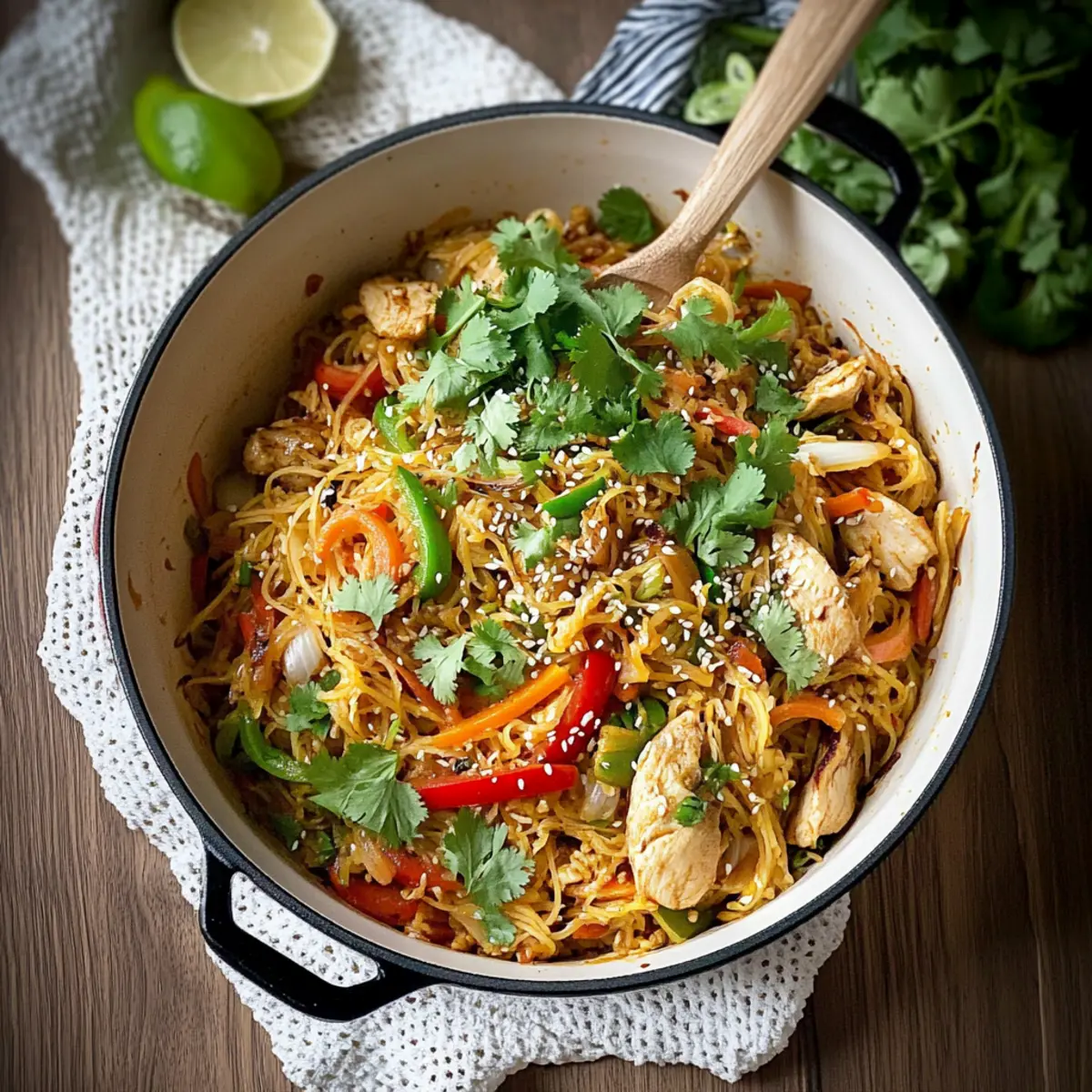
Delicious Spaghetti Squash Pad Thai: A Healthy Twist
Ingredients
Equipment
Method
- Preheat your oven to 400°F (200°C). Cut the spaghetti squash in half lengthwise and scoop out the seeds. Drizzle with olive oil, season with salt and pepper, and place cut side down on a baking sheet. Roast for 30-40 minutes until tender.
- In a medium bowl, combine soy sauce, natural peanut butter, rice vinegar, honey, minced garlic, and grated ginger. Whisk together until smooth.
- Heat a large skillet or wok over medium-high heat with a tablespoon of oil. Add diced chicken breasts, seasoning with salt and pepper, and sauté for about 5-7 minutes until golden brown and cooked through.
- Using the same skillet, lower heat to medium and add another drizzle of oil if necessary. Sauté the chopped white onion until translucent, about 2-3 minutes. Then, add bell peppers, shredded carrots, and optional shishito peppers, cooking for 4-5 minutes.
- Push the sautéed vegetables to one side, creating space for eggs. Crack in the eggs and scramble gently for about 2-3 minutes until just set. Mix with vegetables for another minute.
- Scrape the strands from each half of the spaghetti squash and add to the skillet along with the prepared sauce. Toss everything together for about 2-3 minutes.
- Return cooked chicken to the skillet, stir in chopped green onions and fresh cilantro. Taste and adjust seasoning if needed, then serve warm.
Leave a Reply