
As I stood in my kitchen, the vibrant colors of spring burst through the window, calling to be captured in a dish. That’s when I knew it was time for my creamy spring vegetable risotto, a celebration of the season’s freshest ingredients. Packed with tender asparagus, sweet peas, crunchy radishes, and delicate leeks, this risotto is a luxurious yet quick vegetarian delight that you can whip up in under 40 minutes! Not only does it offer a comforting embrace on a busy weeknight, but it also elevates your cooking game, transforming simple vegetables into a beautifully textured masterpiece. What’s your favorite seasonal veggie to feature in a dish like this?

Why is Spring Vegetable Risotto a Must-Try?
Quick and Easy: With just 40 minutes of prep time, you can create a delightful dish that captures springtime flavors.
Fresh Ingredients: Highlighting seasonal produce like asparagus and peas ensures every bite is vibrant and full of life.
Versatile: Feel free to swap in your favorite veggies, like zucchini or spinach, making it adaptable for any palate.
Creamy Satisfaction: The combination of mascarpone and Parmesan cheese lends a velvety texture you won’t forget.
Perfect for Any Occasion: Whether it’s a cozy dinner or an impressive gathering, this risotto impresses every time! Pair it with a crisp salad or a loaf of garlic bread for the perfect meal. If you’re looking for more delicious vegetarian options, check out my Pumpkin Risotto Goat or Roasted Vegetable Orzo.
Spring Vegetable Risotto Ingredients
• Dive into the vibrant flavors with these essential ingredients!
For the Risotto Base
- Unsalted Butter (6 tablespoons) – Adds richness and flavor; substitute with vegan butter for a dairy-free option.
- Leeks (2, sliced) – Provides a mild onion-like flavor; use green onions if unavailable.
- Arborio Rice (1 cup) – Essential for creamy texture in spring vegetable risotto; Carnaroli rice can be used for an even creamier result.
- Dry White Wine (¼ cup) – Enhances flavor depth; replace with additional vegetable broth for a non-alcoholic version.
- Low Sodium Chicken or Vegetable Stock (3 cups, warmed) – Provides a flavorful base; use homemade or store-bought as preferred.
For the Vegetables
- Radishes (1½ cups, quartered) – Adds crunch and peppery flavor; replace with diced carrots if necessary.
- Asparagus (1½ cups, chopped) – Seasonal veggie for freshness; substitute with green beans if not in season.
- Frozen Peas (¾ cup, thawed) – Adds sweetness; fresh peas can also be used if available.
For the Seasoning and Creaminess
- Salt and Freshly Cracked Black Pepper – For seasoning to taste.
- Lemon Zest (1 teaspoon) – Brightens the dish with freshness.
- Grated Parmesan Cheese (1 cup) – Adds a salty, nutty flavor; use nutritional yeast for a dairy-free version.
- Mascarpone Cheese (½ cup) – Makes the risotto creamy and luxurious; substitute with heavy cream if needed.
- Chives (1 tablespoon, chopped, plus more for garnish) – Adds a mild onion flavor; green onions can be an alternative.
Step‑by‑Step Instructions for Creamy Spring Vegetable Risotto
Step 1: Sauté the Leeks
Melt 3 tablespoons of unsalted butter in a spacious pot over medium heat. Add the sliced leeks and sauté for about 5 minutes until they become translucent and fragrant. This gentle cooking will enhance their sweetness and flavor, laying a delicious foundation for your spring vegetable risotto.
Step 2: Toast the Rice
Stir in 1 cup of Arborio rice and toast for about 1 minute, letting the grains absorb the flavors. Then, pour in ¼ cup of dry white wine and continue stirring until almost fully absorbed. This process infuses the rice with a vibrant depth while preparing it for the creamy texture that will follow.
Step 3: Gradually Add Stock
Begin adding 3 cups of warmed vegetable stock, about ½ cup at a time. Stir frequently, allowing the liquid to be absorbed before adding more. Continue this gradual addition for approximately 15-20 minutes, checking for a creamy consistency and a slight al dente bite in the rice.
Step 4: Incorporate Radishes
When about 1 cup of stock remains, stir in the quartered radishes along with another ½ cup of stock. Keep stirring until the radishes are tender-crisp and the liquid is absorbed, about 5 minutes. This step ensures the radishes blend seamlessly into your creamy spring vegetable risotto while retaining their delightful crunch.
Step 5: Add Asparagus
Introduce the chopped asparagus and any remaining stock to the pot, mixing well. Season with salt and continue cooking, stirring until the asparagus is just tender and the rice reaches the perfect balance of creaminess and firmness, about another 5 minutes.
Step 6: Finish with Creaminess
Lower the heat and gently fold in the lemon zest, thawed peas, cracked pepper, the remaining 3 tablespoons of butter, grated Parmesan, mascarpone cheese, and chopped chives. Stir until everything is well combined and creamy, creating a luxurious texture that highlights the vibrant flavors of your spring vegetable risotto.
Step 7: Serve and Garnish
Serve your creamy spring vegetable risotto immediately, garnished with additional lemon zest, Parmesan, and reserved chives for a beautiful presentation. This final touch not only elevates the dish visually but also enhances its fresh flavors, making each bite a delightful celebration of spring!

Make Ahead Options
These creamy spring vegetable risotto preparations are perfect for meal prep lovers! You can chop the leeks, asparagus, and radishes up to 24 hours in advance, storing them in airtight containers in the refrigerator to preserve their freshness. Additionally, measure out the Arborio rice and keep it handy to save time. When you’re ready to enjoy your risotto, simply sauté the leeks, then continue with the cooking instructions, adding the prepped vegetables at their appropriate times. This way, you’ll achieve that creamy, luxurious texture without sacrificing any flavor, making dinner a breeze on busy weeknights!
Spring Vegetable Risotto Variations
Feel free to play around with this recipe, making it uniquely yours while maintaining its delightful essence.
- Dairy-Free: Substitute unsalted butter and mascarpone with vegan alternatives for a creamy twist.
- Wine-Free: Replace dry white wine with extra vegetable broth for a non-alcoholic flavor boost.
- Protein-Packed: Top with pan-seared scallops or grilled chicken for a satisfying, heartier meal.
- Herb Swap: Use basil or parsley in place of chives to infuse new flavors into your risotto.
- Heat It Up: Add a pinch of red pepper flakes or diced jalapeños for a gentle kick of heat.
- Seasonal Twist: Swap asparagus for zucchini or spinach based on your favorite seasonal veggies.
- Flavor Infusion: Experiment with adding fresh citrus like lime or orange zest for a vibrant touch.
- Texture Add: Toss in toasted pine nuts or walnuts for an added crunch that contrasts beautifully with the creaminess.
For more inspiring veggie dishes, don’t miss out on my delicious Pumpkin Risotto Goat or the delightful Roasted Vegetable Orzo. Happy cooking!
Storage Tips for Spring Vegetable Risotto
- Fridge: Store leftovers in an airtight container for up to 3 days to maintain freshness and flavor. Reheat gently on the stovetop or in the microwave with a splash of vegetable stock to restore creaminess.
- Freezer: You can freeze spring vegetable risotto for up to 2 months. Divide it into portions and use airtight containers or freezer bags to prevent freezer burn.
- Reheating: When reheating, add a touch of water or broth to keep the risotto creamy and prevent it from drying out. Stir occasionally for even heating.
- No Refreezing: Avoid refreezing once thawed to maintain quality; only thaw what you plan to eat in one sitting.
What to Serve with Creamy Spring Vegetable Risotto?
Elevate your dining experience by pairing this vibrant risotto with delightful accompaniments that complement its rich flavors.
- Crispy Garlic Bread: The crunchy, buttery texture of garlic bread provides a perfect contrast to the creamy risotto, making each bite a varied adventure.
- Mixed Green Salad: A refreshing salad with a tangy vinaigrette brightens your plate, balancing the richness of the risotto while adding a satisfying crunch.
- Grilled Lemon Chicken: The zesty flavor of lemon chicken enhances the fresh, seasonal elements of the risotto, creating a harmonious meal full of delightful contrasts.
- Roasted Asparagus: This echoes the asparagus in your risotto, bringing a roasted flavor and char that enhances the overall taste without overwhelming it.
- Herb-Infused Quinoa: For a nutritious side, quinoa adds an interesting texture and herby flavor profile, complementing the risotto’s creaminess beautifully.
- Chilled White Wine: A glass of crisp Sauvignon Blanc or Pinot Grigio pairs wonderfully, cutting through the richness of the dish and adding a refreshing note with each sip.
- Zesty Lemon Sorbet: For dessert, lemon sorbet provides a light and refreshing finish, cleansing the palate with its bright acidity after the rich risotto.
- Sautéed Spinach: Tossed in garlic and olive oil, sautéed spinach delivers a delicious earthiness that works wonderfully with the risotto’s creamy texture.
Helpful Tricks for Spring Vegetable Risotto
-
Warm Stock is Key: Make sure your stock is warm before adding it to the rice. This helps maintain cooking temperature for a creamy texture in your spring vegetable risotto.
-
Stir Occasionally: Stirring every 30 seconds to a minute is sufficient. This technique helps release starch from the rice, contributing to creaminess without the need for continuous stirring.
-
No Rinsing Rice: Avoid rinsing your Arborio rice, as this removes the essential starch that gives risotto its signature creamy quality.
-
Correct Vegetable Timing: Add the vegetables at the right moments to keep their flavors bright and ensure they maintain a tender-crisp texture, especially with asparagus and radishes.
-
Taste as You Go: Don’t forget to taste along the way! Adjust the seasoning with salt and pepper to make sure each bite of your spring vegetable risotto is just right.

Spring Vegetable Risotto Recipe FAQs
What type of vegetables should I use for spring vegetable risotto?
Absolutely! The beauty of spring vegetable risotto lies in its versatility. Opt for seasonal favorites like asparagus, sweet peas, radishes, or tender leeks. If you prefer, you can easily swap in zucchini or spinach, depending on what you have available. Fresh vegetables brighten up the dish and ensure each spoonful sings with seasonal flavors.
How should I store leftover risotto?
Very simply! Store your leftover spring vegetable risotto in an airtight container in the fridge for up to 3 days. Just make sure to reheat it gently on the stovetop or in the microwave. Adding a splash of vegetable stock while reheating helps to restore its creamy texture, which can sometimes be lost after cooling.
Can I freeze spring vegetable risotto?
Certainly! You can freeze your spring vegetable risotto for up to 2 months. Just divide the risotto into portions and transfer them into airtight containers or freezer bags, ensuring to remove as much air as possible to prevent freezer burn. When you’re ready to enjoy it again, simply thaw it overnight in the refrigerator and reheat on the stovetop with a splash of broth for the best results.
What can I do if my risotto turns out too dry?
No worries! If your spring vegetable risotto comes out too dry, it’s a common issue. Gradually add in some warm stock or water while stirring until the desired consistency is reached. This will help to moisten the grains and reintroduce some of the creaminess that makes risotto so delightful. If it’s too thick, just keep adding liquid, little by little, until it’s perfect.
Are there any dietary considerations to keep in mind for this recipe?
Definitely! If you’re cooking for someone with dietary restrictions, make use of substitutes. For a dairy-free option, swap out the butter, cheese, and mascarpone for vegan alternatives. Be mindful of allergies related to certain vegetables or any cross-contamination with gluten; always check labels of pre-packaged ingredients like stock. Additionally, make sure to inform guests about the presence of any allergens or ingredients such as wine or certain cheeses.
How can I enhance the flavor of my spring vegetable risotto?
One effective way to boost flavors is to incorporate fresh herbs. Consider adding chopped basil, parsley, or even a sprig of mint right before serving. You can also experiment with different types of cheese, like adding a bit of goat cheese for a tangy twist, or mixing in some freshly grated lemon zest for an extra layer of brightness.
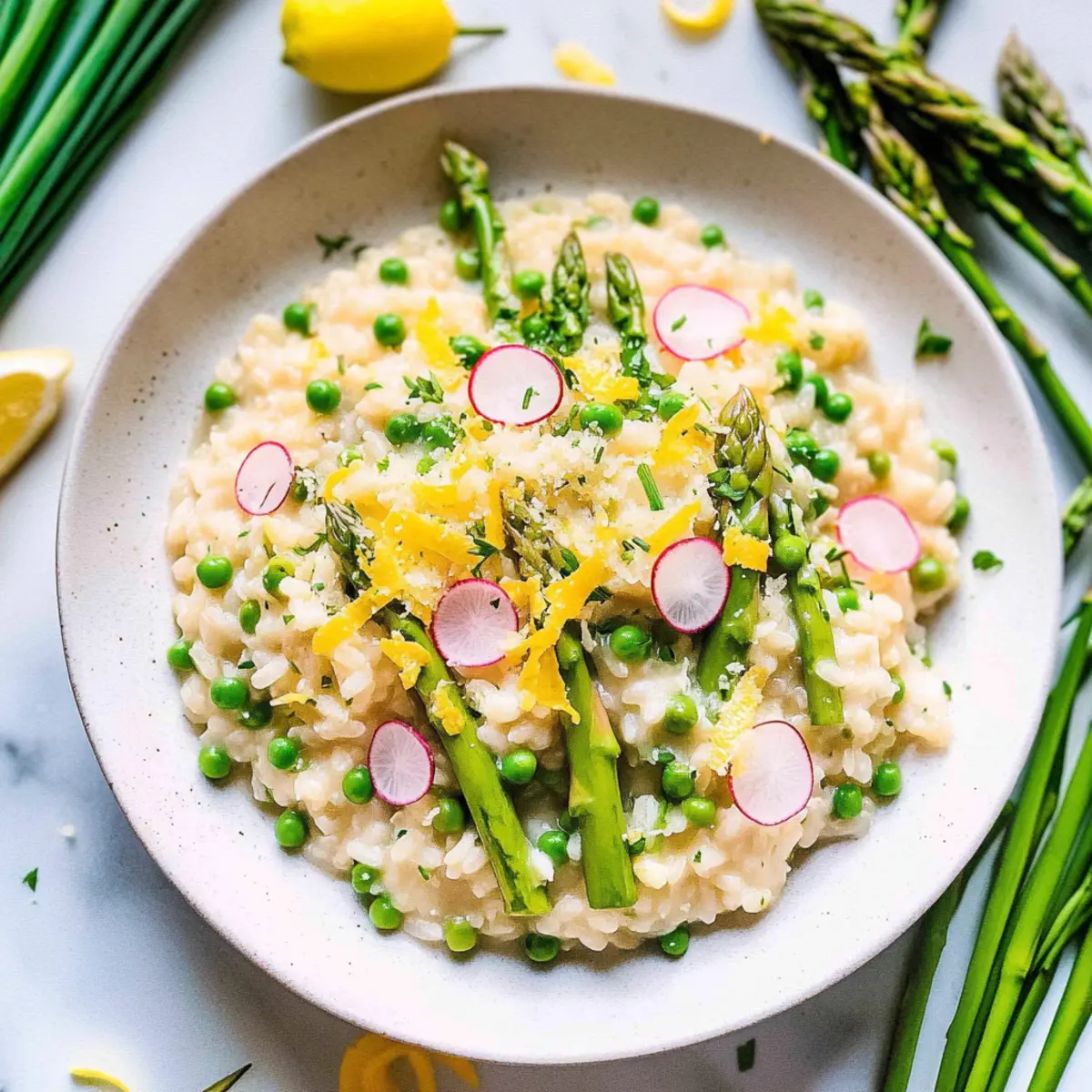
Creamy Spring Vegetable Risotto Your Taste Buds Will Love
Ingredients
Equipment
Method
- Melt 3 tablespoons of unsalted butter in a spacious pot over medium heat. Add the sliced leeks and sauté for about 5 minutes until they become translucent and fragrant.
- Stir in 1 cup of Arborio rice and toast for about 1 minute. Pour in ¼ cup of dry white wine and continue stirring until almost fully absorbed.
- Begin adding 3 cups of warmed vegetable stock, about ½ cup at a time. Stir frequently, absorbing the liquid before adding more for about 15-20 minutes.
- When about 1 cup of stock remains, stir in the quartered radishes along with another ½ cup of stock and continue cooking until tender-crisp.
- Introduce the chopped asparagus and remaining stock, mixing well. Season with salt and continue cooking until the asparagus is just tender.
- Lower the heat and gently fold in the lemon zest, thawed peas, cracked pepper, remaining butter, grated Parmesan, mascarpone cheese, and chopped chives.
- Serve immediately, garnished with additional lemon zest, Parmesan, and reserved chives for a beautiful presentation.
Leave a Reply