Ingredients
Equipment
Method
Step-by-Step Instructions for Cajun Honey Butter Salmon
- Start by patting the salmon fillets dry with paper towels to remove excess moisture. Drizzle a tablespoon of olive oil over each fillet, then generously rub Cajun seasoning and salt onto both sides, ensuring the spices coat the fish evenly. Allow the seasoned salmon to rest while you prepare the skillet.
- Heat a non-stick skillet over medium-high heat and add a splash of olive oil, swirling to coat the bottom. Once the oil shimmers, carefully place the salmon fillets skin-side up in the skillet, searing them for about 3 minutes until a crispy crust forms. Gently flip the fillets and cook skin-side down for another 2 minutes or until the skin is golden and the salmon is cooked through, reaching an internal temperature of 145°F (63°C).
- While the salmon is searing, melt 3 tablespoons of unsalted butter in a small saucepan over medium heat. Once frothy, stir in 2 tablespoons of honey, 1 tablespoon of soy sauce, and 2 cloves of minced garlic. Continue to cook, stirring frequently, for about 2 minutes until the sauce thickens slightly. Remove from heat and stir in the juice of half a lemon to add brightness to the Cajun Honey Butter sauce.
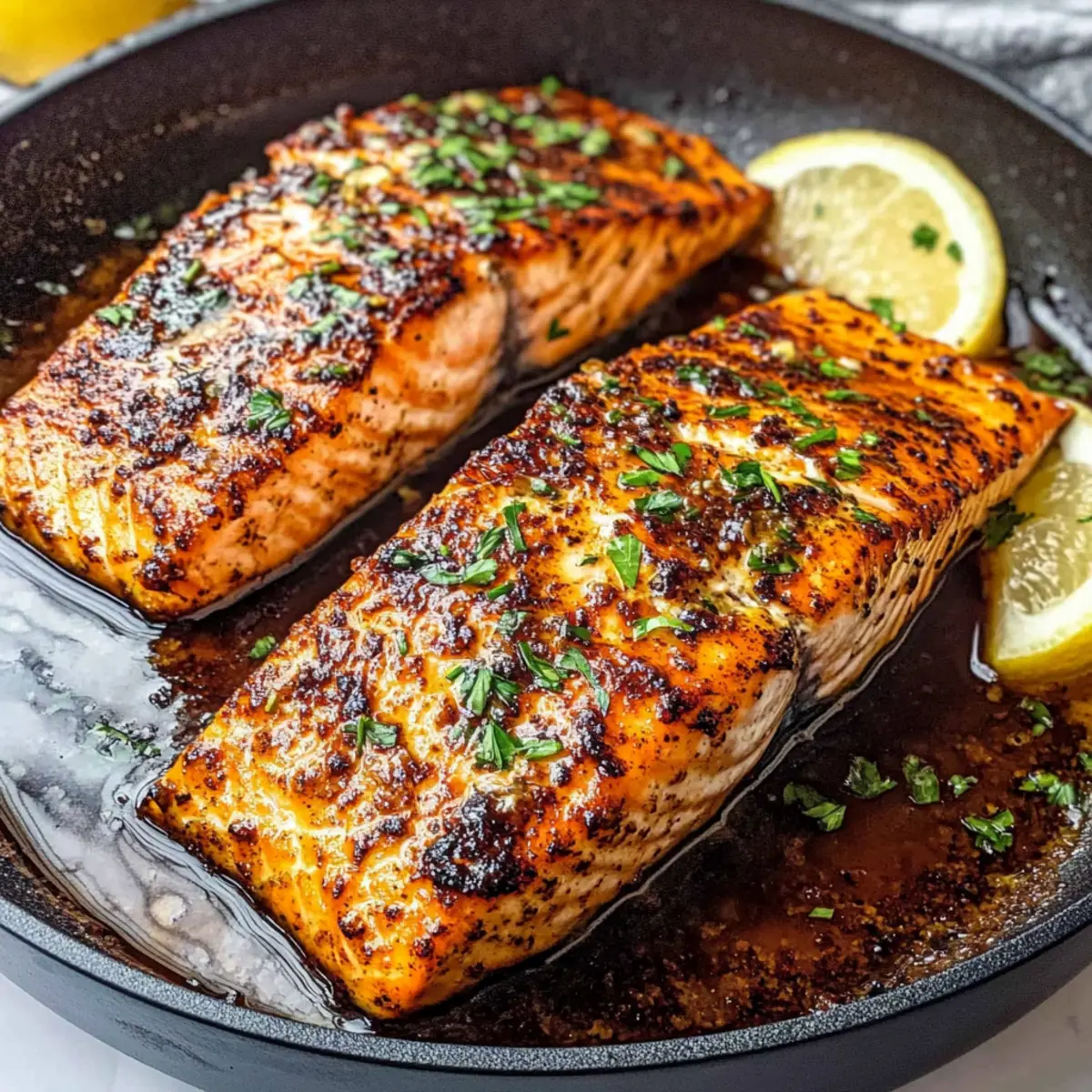
- Pour the luscious honey butter sauce over the seared salmon fillets in the skillet. Use a spoon to continually glaze the salmon with the sauce as it cooks for an additional 3-5 minutes. This process ensures the salmon absorbs the sweet and spicy flavors, creating a beautifully sticky exterior while maintaining the tender, flaky inside.
- Once the salmon is cooked to perfection, carefully transfer the fillets to a serving platter. Garnish with freshly chopped parsley, a few lemon wedges, and a sprinkle of black sesame seeds for an elegant touch. Serve immediately, allowing everyone to savor the delightful blend of spices and sweetness in this Cajun Honey Butter Salmon.
Nutrition
Notes
Ensure the skillet is preheated sufficiently to create a crispy crust. Overcooking the salmon can lead to dryness, so aim for an internal temperature of 145°F (63°C). Cooking in batches can help achieve the best texture.